This or that is a phrase you use when choosing between two people, things, ideas, or options. It helps compare choices and ask someone to make a decision in a simple, natural way.
I still remember helping one of my English students prepare for a speaking test. She spoke confidently until she needed to compare two options. She paused and asked, “Should I say this or that here?” It sounded like a small question, but it opened the door to a common English challenge.
Many English learners see this and that every day. They look simple, yet they often cause confusion. Should you say this or that? Can you use them together? What does the phrase this or that really mean? These questions are common because the words change depending on distance, context, and even the speaker’s intention.
The good news is that the idea is much easier than it first appears. Once you understand how these words work, choosing the right one becomes natural.
In this guide, you’ll learn the meaning of this or that, where it came from, how to use it correctly, common mistakes to avoid, and real-world examples you can copy in your own writing and conversations.
This or That :Quick Answer
The phrase this or that presents two choices. It asks someone to pick one option or compares two possibilities.
Simple examples
- Would you like this or that?
- We need to decide between this or that before tomorrow.
- I can’t choose this or that because both look good.
In everyday English, the phrase appears in conversations, games, quizzes, shopping, classrooms, and even business meetings.
The Origin / Background of This or That
The words this and that have been part of the English language for hundreds of years. Both come from Old English, where speakers used similar words to point to people, places, or objects.
These words belong to a group called demonstrative pronouns and demonstrative determiners. Their main job is to point to something.
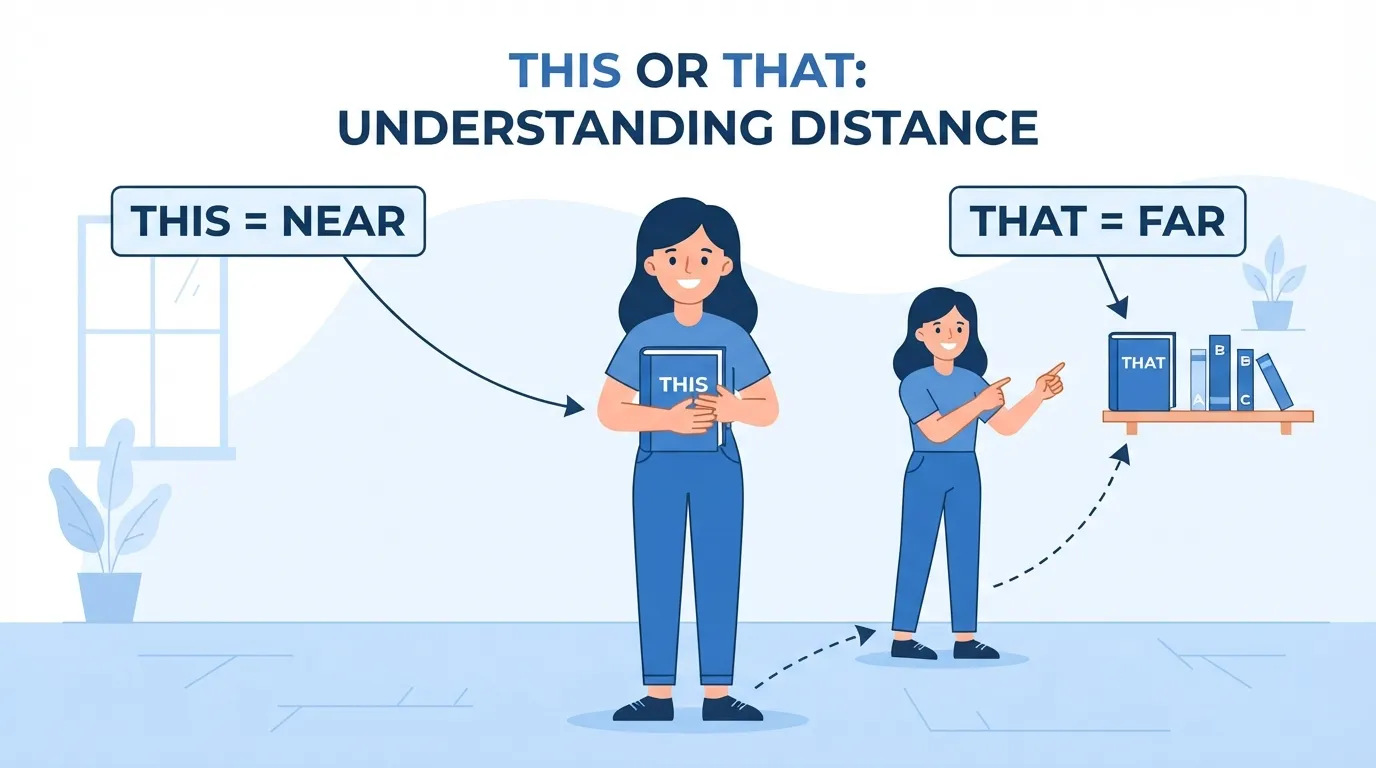
- This usually refers to something near the speaker.
- That usually refers to something farther away.
Over time, English speakers naturally began putting the two words together as this or that whenever they wanted to talk about two possible choices.
Today, the phrase appears in many situations, including:
- Everyday conversations
- Classroom activities
- Party games
- Online quizzes
- Surveys
- Product comparisons
- Decision-making discussions
Although the phrase is very common, many learners mistakenly think it has a special grammar rule. In reality, it simply joins two demonstrative words with or to show a choice.
This or That Explained :Key Differences
Understanding this or that becomes much easier when you first understand the individual words.
What does this mean?
This points to someone or something close to the speaker.
Examples:
- This book is mine.
- I like this phone.
- This is my favorite song.
What does that mean?
That points to someone or something farther away or less immediate.
Examples:
- That building is very old.
- Who owns that car?
- I remember that day.
What does this or that mean together?
When combined, this or that simply offers two possible choices.
Examples:
- Which color do you prefer—this or that?
- Should we buy this or that?
- Pick this or that before time runs out.
Comparison Table
| Term | Meaning | When to Use | Region/Context |
| This | Refers to something near | Talking about nearby objects, ideas, or people | Standard English worldwide |
| That | Refers to something farther away | Talking about distant or previously mentioned things | Standard English worldwide |
| This or That | Presents two choices | Asking someone to choose between two options | Everyday English worldwide |
Understanding the Difference with Real Situations
Imagine you’re shopping for shoes.
You hold one pair in your hand.
You point and say:
“I like this.”
Then you notice another pair on a different shelf.
You point and say:
“I also like that.”
Now your friend asks:
“Which one will you buy—this or that?”
The phrase naturally combines both choices into one question.
Another Example
A teacher shows two pictures.
She asks the class:
“Which picture tells the story better: this or that?”
Students immediately understand they need to choose one option.
Common Situations Where People Use This or That
You’ll often hear this phrase in:
- Shopping
- Classroom discussions
- Decision-making
- Polls
- Social media questions
- Icebreaker games
- YouTube challenges
- Podcasts
- Family conversations
- Team meetings
The phrase sounds natural because English speakers constantly compare options.
Quick Tip
A simple way to remember the difference is:
- This = Near
- That = Far
- This or that = Choose one
That single rule will help you use the phrase correctly in most everyday situations.
Which Version or Approach Should You Use?
Choosing between this, that, or this or that depends on what you want to say. There is no “better” word. The right choice depends on the situation.
Use this when something is close
Use this when you are talking about:
- Something near you
- Something happening now
- An idea you just mentioned
Examples:
- This coffee is hot.
- I love this movie.
- This is exactly what I needed.
Use that when something is farther away
Use that when you are talking about:
- Something far from you
- Something in the past
- An idea mentioned earlier
Examples:
- That mountain looks beautiful.
- I remember that conversation.
- Who owns that bicycle?
Use this or that when asking someone to choose
This phrase is perfect when there are two options.
Examples:
- Would you like this or that?
- Which shirt should I wear—this or that?
- We have to decide between this or that today.
Practical Recommendations
- For English learners: Learn the difference between this and that first. Then using this or that becomes easy.
- For students: Use the phrase when comparing two answers or ideas.
- For professionals: Use it in meetings when discussing two possible solutions.
- For global English: This or that is understood everywhere English is spoken.
Common Mistakes with This or That
Many learners make the same mistakes. The good news is that they are easy to fix.
| Mistake | Correct Version | Why It Happens |
| This are my books. | This is my book. | Mixing singular and plural forms. |
| That are my keys. | Those are my keys. | Using that instead of those. |
| Choose this and that. | Choose this or that. | Using the wrong conjunction. |
| I like this there. | I like that. | Confusing location words. |
| This or these? (for one object) | This. | Forgetting that these is plural. |
Mistake 1: Using this for something far away
❌ This mountain looks amazing.
✅ That mountain looks amazing.
If the object is far away, that is usually the better choice.
Mistake 2: Saying this and that instead of this or that
These phrases have different meanings.
- This or that = choose one.
- This and that = both things or many different things.
Compare them:
- Choose this or that. ✅
- We talked about this and that all afternoon. ✅
Mistake 3: Forgetting singular and plural forms
Remember this pattern:
| Singular | Plural |
| This | These |
| That | Those |
Examples:
- This book is new.
- These books are new.
- That chair is broken.
- Those chairs are broken.
Mistake 4: Using this without pointing to anything
Sometimes learners say:
This is better.
But the listener may not know what this means.
Instead, be clear.
Better example:
This blue laptop is better.
Providing context makes your meaning easy to understand.
This or That in Real-World Examples
Seeing the phrase in real situations helps you remember it.
Professional Email
Hi Sarah,
We have two logo designs ready for review. Could you please let us know whether you prefer this or that? Your feedback will help us make the final decision.
Thank you!
Here, this or that asks the reader to choose between two designs.
News Headline
Consumers Choose This or That as Prices Continue to Rise
The headline suggests that shoppers must decide between two options because of changing prices.
Social Media Post
This or that?
Coffee ☕ or Tea 🍵?
Vote in the comments!
This format is extremely popular on Instagram, Facebook, TikTok, and X because it encourages engagement.
Formal Report
Survey participants were asked to choose this or that before completing the questionnaire.
In reports, the phrase is clear, concise, and professional.
Everyday Conversation
Emma: Which jacket looks better?
David: Hmm… this or that?
Emma: I think this one.
Classroom Example
Teacher:
Look at both pictures. Which one tells the story better—this or that?
Students understand immediately that only one answer should be chosen.
Shopping Example
Customer:
I’m not sure which phone to buy.
Salesperson:
Would you prefer this or that? Both are on sale today.
This is one of the most common real-life uses of the phrase.
This or That — Data, Trends & Usage
The phrase this or that is one of the most widely recognized choice expressions in English. People search for it for different reasons, including grammar, conversation practice, games, and writing help.
Who searches for it most?
The topic is especially popular among:
- English language learners
- School and college students
- Teachers
- Content creators
- Quiz and game enthusiasts
- Bloggers and copywriters
Where is it commonly used?
English speakers around the world use this or that, including in:
- The United States
- The United Kingdom
- Canada
- Australia
- New Zealand
- India
- Pakistan
- The Philippines
- Other English-learning countries
Because it is part of standard English, the phrase is understood internationally.
Search Intent
| Category | Intent |
| Primary Intent | Informational |
| Secondary Intent | Educational |
| Related Intent | Grammar learning, English speaking, writing improvement, classroom activities |
Most people searching for this or that want to understand its meaning, learn the correct usage, or find examples they can use in everyday conversations.
Why It Matters Today
The phrase has become even more popular because of online polls, interactive quizzes, social media challenges, and “This or That” games. These activities encourage quick decisions and boost engagement, making the expression familiar to people of all ages.
Standalone Comparison Table
| Term/Variant | Meaning | Region/Context | Best Used When |
| This | Refers to something close | Standard English worldwide | Talking about nearby people, objects, or ideas |
| That | Refers to something farther away | Standard English worldwide | Referring to distant objects or earlier ideas |
| This or That | Offers two choices | Everyday conversation, education, business | Asking someone to choose between two options |
| This and That | Refers to multiple things together | Informal conversation | Talking about several different topics or items |
| These or Those | Offers a choice between plural items | Standard English | Comparing groups of objects |
Frequently Asked Questions (FAQs)
Q: What does “this or that” mean?
This or that means choosing between two people, objects, ideas, or options. It is a common English phrase used to ask someone to make a choice.
Q: How do you use “this or that” correctly?
Use this or that when you want someone to select one of two options.
Examples:
- Would you like this or that?
- Which design do you prefer—this or that?
- We need to choose this or that before placing the order.
Q: What is the difference between “this” and “that”?
The main difference is distance.
- This refers to something close to the speaker.
- That refers to something farther away or something mentioned earlier.
For example:
- This apple looks fresh. (The apple is near you.)
- That apple looks fresh. (The apple is farther away.)
Q: Is “this or that” correct in formal writing?
Yes. This or that is perfectly acceptable in formal writing when presenting two choices.
For example:
Applicants may select this or that payment option before completing the registration process.
It is also common in reports, business emails, surveys, and academic materials.
Q: Which is correct: “this or that” or “this and that”?
Both are correct, but they have different meanings.
- This or that means choose one.
- This and that means both things or many different things.
Examples:
- Choose this or that before we leave.
- We talked about this and that during lunch.
Q: Where does the phrase “this or that” come from?
The phrase developed naturally in English from the demonstrative words this and that, which have existed since Old English. Speakers combined them with or whenever they wanted to present two possible choices.
Today, the expression is used worldwide in spoken and written English.
Q: Can “this or that” be used in games and social media?
Absolutely. In fact, it is one of the most popular formats for interactive content.
Examples include:
- Pizza or Burger?
- Beach or Mountains?
- Books or Movies?
These “This or That” questions encourage people to participate by sharing their preferences.
Conclusion
At first glance, this or that looks like a very simple phrase. Yet many English learners pause when deciding whether to use this, that, or the complete expression this or that. Once you understand the basic rule, the confusion quickly disappears.
Remember these key points:
- This refers to something close.
- That refers to something farther away or previously mentioned.
- This or that is used when you are asking someone to choose between two options.
- The phrase is natural in conversations, classrooms, business communication, surveys, and online content.
The best way to master it is through regular practice. Pay attention to how native speakers use these words in books, videos, and everyday conversations. Then try using them yourself in simple sentences. The more you practice, the more natural they will feel.
Now you know exactly how to use this or that. Try using it in your next conversation or piece of writing with confidence. If you found this guide helpful, bookmark it so you can quickly refresh your memory whenever you need it.
Read More: Led or Lead: Easy Guide to Never Mix Them Up

Muhammad Afzal is a language content writer specializing in English grammar, word usage, and vocabulary distinctions. With a strong command of linguistic nuance, Muhammad Afzal focuses on simplifying commonly confused word pairs to help readers communicate with clarity and confidence.