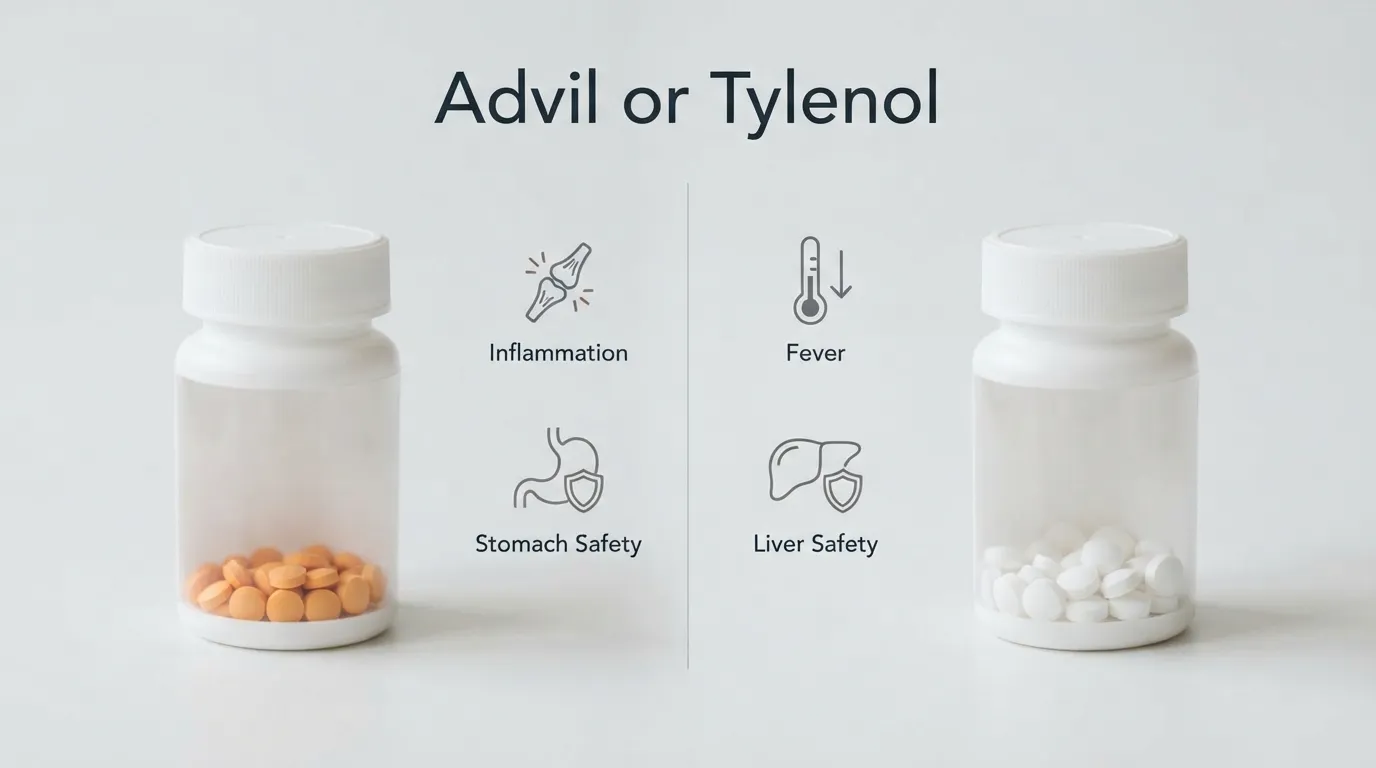
Advil may be more helpful when pain includes swelling or inflammation, while Tylenol treats pain and fever without being an anti-inflammatory medicine. The safer choice depends on your health, other medicines, age, pregnancy status, and the cause of your pain.
A headache, fever, toothache, or sore muscle may leave you choosing between Advil and Tylenol. Both are common over-the-counter pain relievers, but they contain different medicines and affect the body differently.
Advil contains ibuprofen, while Tylenol contains acetaminophen, also called paracetamol in many countries. Ibuprofen reduces inflammation, but it may cause stomach, kidney, bleeding, or heart-related problems in some people. Acetaminophen does not reduce inflammation, and taking too much can cause serious liver damage. This guide explains their uses, differences, risks, and when to ask a healthcare professional for advice.
Medical safety note: This guide provides general information only. Always follow the Drug Facts label and consult a doctor or pharmacist when you have medical conditions, take other medicines, are pregnant, or are choosing medicine for a child.
What Is the Difference Between Advil and Tylenol?
Advil contains ibuprofen, while Tylenol contains acetaminophen.
Ibuprofen belongs to a medicine group called nonsteroidal anti-inflammatory drugs, or NSAIDs. It reduces pain, fever, and inflammation.
Acetaminophen is a pain reliever and fever reducer. It can help with mild to moderate pain but does not have the same anti-inflammatory action as ibuprofen.
| Feature | Advil | Tylenol |
|---|---|---|
| Active ingredient | Ibuprofen | Acetaminophen |
| Relieves pain | Yes | Yes |
| Reduces fever | Yes | Yes |
| Reduces inflammation | Yes | No significant anti-inflammatory effect |
| Main safety concern | Stomach bleeding, kidney and heart risks | Liver damage from excessive amounts |
| Can be taken with food | Often recommended to reduce stomach upset | Can be taken with or without food |
| Common international name | Ibuprofen | Paracetamol outside the US |
| Medicine type | NSAID | Analgesic and fever reducer |
Always check the active ingredient because some Advil and Tylenol products contain additional medicines for colds, allergies, sleep, or other symptoms.
What Is Advil?
Advil is a brand of ibuprofen. Ibuprofen is used to lower fever and relieve minor pain caused by conditions such as:
- Headaches
- Toothaches
- Backaches
- Muscle aches
- Menstrual cramps
- Arthritis
- Colds
- Minor injuries
Ibuprofen also reduces inflammation, tenderness, stiffness, and swelling. This may make it useful when inflammation is an important part of the problem.
Examples include:
- A swollen ankle after a minor sprain
- Menstrual pain involving cramping
- Pain and swelling from arthritis
- Muscle pain after an injury
- Dental pain with inflammation
However, the cause and severity of the pain still matter. A healthcare professional may recommend another treatment depending on your condition.
What Is Tylenol?
Tylenol is a brand of acetaminophen. Acetaminophen is used to relieve mild to moderate pain and reduce fever.
It may be used for:
- Headaches
- Toothaches
- Muscle aches
- Back pain
- Cold or flu discomfort
- Fever
- Mild arthritis pain
Acetaminophen changes how the body senses pain and helps lower body temperature. Unlike ibuprofen, it does not provide meaningful relief from swelling or inflammation.
Tylenol may be considered when a person should avoid NSAIDs because of certain stomach, bleeding, kidney, or heart concerns. However, it may not be suitable for someone with liver disease, heavy alcohol use, or another medicine that already contains acetaminophen.
Is Advil or Tylenol Better for Inflammation?
Advil is generally the more suitable choice when inflammation or swelling is involved because ibuprofen is an NSAID.
Inflammation may cause:
- Swelling
- Redness
- Tenderness
- Stiffness
- Warmth around an injured area
Ibuprofen blocks the production of substances involved in pain, fever, and inflammation. Acetaminophen treats pain and fever but does not work as an anti-inflammatory medicine.
This does not mean that Advil is safe for everyone. People with kidney disease, previous stomach bleeding, ulcers, certain heart conditions, or blood-thinning medication should speak to a doctor or pharmacist before taking an NSAID.
Advil or Tylenol for a Headache
Both Advil and Tylenol may relieve a minor headache.
Tylenol may be suitable for a simple headache when inflammation is not a major concern. Advil may help some headaches because it treats pain and inflammation. However, headaches have many possible causes, including dehydration, illness, stress, vision problems, medication overuse, or migraine.
Do not keep taking pain medicine for frequent or severe headaches without medical advice. Seek urgent help for a sudden extremely severe headache, a headache after a serious injury, or one accompanied by weakness, confusion, fainting, neck stiffness, or difficulty speaking.
Advil or Tylenol for Fever
Both medicines can reduce fever.
The better option depends on the person’s age, medical history, other medicines, hydration, and the product label. Acetaminophen is a fever reducer, while ibuprofen reduces both fever and inflammation.
Contact a healthcare professional when a fever is severe, continues for several days, affects a very young child, or occurs with serious symptoms such as breathing difficulty, confusion, dehydration, seizures, a stiff neck, or a spreading rash.
Advil or Tylenol for Tooth Pain
Both medicines may help with tooth pain. Advil may have an extra benefit when the pain involves inflammation or swelling around the tooth or gums.
However, pain medicine does not treat the cause of a dental problem. A cavity, infection, cracked tooth, or gum problem requires dental care.
Contact a dentist when tooth pain:
- Is severe or getting worse
- Continues for more than a short period
- Causes facial swelling
- Occurs with fever
- Makes swallowing or breathing difficult
- Produces pus or a bad taste
Facial swelling with difficulty breathing or swallowing requires urgent medical help.
Advil or Tylenol for Menstrual Cramps
Advil may be more effective for many people with menstrual cramps because ibuprofen reduces substances involved in inflammation and cramping. Nonprescription ibuprofen is commonly used for menstrual pain.
Tylenol may still reduce pain, especially when a person cannot safely take an NSAID.
Speak to a healthcare professional if menstrual pain is severe, suddenly becomes worse, causes fainting, or regularly prevents normal activities.
Which One Is Easier on the Stomach?
Tylenol does not carry the same stomach-ulcer and gastrointestinal-bleeding risks as NSAIDs such as ibuprofen. Therefore, it may be considered for some people who have sensitive stomachs or need to avoid NSAIDs.
Advil can cause stomach discomfort, ulcers, or bleeding. The risk may be higher among older adults, people with a history of ulcers, those who drink large amounts of alcohol, and people taking blood thinners, steroids, aspirin, or other NSAIDs.
Taking ibuprofen with food or milk may reduce ordinary stomach upset, but it does not remove the risk of serious bleeding.
Seek medical help for:
- Vomit containing blood or material resembling coffee grounds
- Black or tar-like stools
- Blood in the stool
- Severe stomach pain
- Fainting or unusual weakness
Which One Is Safer for the Liver?
Ibuprofen is not mainly associated with the same overdose-related liver danger as acetaminophen. However, it has other important risks and can still cause serious side effects.
Tylenol must be used carefully because taking too much acetaminophen can cause liver failure or death. Accidental overdose may happen when someone takes Tylenol along with a cold, flu, sleep, or prescription medicine that also contains acetaminophen.
Never take more acetaminophen than the product label allows. Check every medicine for terms such as:
- Acetaminophen
- APAP
- Paracetamol
Anyone who thinks they have taken too much acetaminophen should seek medical help immediately, even if they feel well. Symptoms may be delayed.
Which One Is Safer for the Kidneys and Heart?
Advil and other NSAIDs require caution in people with kidney disease, dehydration, heart disease, high blood pressure, heart failure, or a previous heart attack or stroke.
NSAIDs may increase the risk of heart attack or stroke, especially when taken in higher doses or for longer periods. Ibuprofen can also affect kidney function and fluid balance in vulnerable people.
Ask a healthcare professional before taking Advil if you:
- Have kidney disease
- Have heart disease or heart failure
- Have high blood pressure
- Take a diuretic or blood thinner
- Have experienced stomach bleeding
- Are dehydrated from vomiting or diarrhoea
- Take another NSAID
Tylenol may avoid some NSAID-related stomach, kidney, and bleeding risks, but its liver warnings must still be taken seriously.
Advil or Tylenol During Pregnancy
Pregnant people should consult a healthcare professional before taking either medicine.
The FDA recommends avoiding NSAIDs such as ibuprofen from 20 weeks of pregnancy onward unless a healthcare professional specifically advises their use. NSAIDs at this stage may cause kidney problems in the unborn baby and reduce amniotic fluid. Additional risks may occur later in pregnancy.
Acetaminophen may sometimes be considered during pregnancy, but it should not be taken automatically. Discuss the benefits, risks, dose, and treatment duration with a qualified healthcare professional.
Advil or Tylenol for Children
Both ibuprofen and acetaminophen are available in products made for children, but the correct product and dose depend on factors such as age, weight, concentration, and medical history.
Parents and caregivers should:
- Use a product intended for the child’s age.
- Follow the label’s weight-based instructions.
- Use the measuring device supplied with liquid medicine.
- Avoid adult products unless directed by a professional.
- Check cold and flu medicines for duplicate ingredients.
- Ask a doctor or pharmacist when unsure.
Using a kitchen spoon can provide an incorrect amount. Never guess a child’s dose or combine medicines without professional guidance.
Can You Take Advil and Tylenol Together?
Some people may be advised to use ibuprofen and acetaminophen together or at different times because they are different medicines. However, this is not automatically safe for everyone.
Combining medicines can create confusion about timing and total daily amounts. It may also be unsafe for people with liver, kidney, stomach, bleeding, or heart conditions.
Ask a doctor or pharmacist before combining them. Check every product’s active ingredients, especially combination cold, flu, migraine, and sleep medicines.
Practical Examples
Advil May Be Considered When:
- A minor injury involves pain and swelling.
- Menstrual cramps include inflammation and cramping.
- Arthritis causes pain and stiffness.
- A healthcare professional recommends an NSAID.
- The person has no condition or medicine that makes ibuprofen unsafe.
Tylenol May Be Considered When:
- The main symptoms are pain or fever without swelling.
- A healthcare professional advises avoiding NSAIDs.
- Stomach irritation or bleeding is a concern.
- The person can safely take acetaminophen.
- No other medicine being used contains acetaminophen.
Ask a Healthcare Professional When:
- You have liver, kidney, stomach, heart, or bleeding problems.
- You take blood thinners or several medicines.
- You are pregnant or breastfeeding.
- Medicine is needed for a baby or young child.
- Pain is severe, frequent, unexplained, or long-lasting.
- Fever continues or becomes worse.
Common Mistakes
| Common Mistake | Correct Information | Why It Matters |
|---|---|---|
| Advil and Tylenol are the same medicine. | Advil contains ibuprofen; Tylenol contains acetaminophen. | They have different actions and risks. |
| Tylenol cannot cause serious harm. | Excessive acetaminophen can cause severe liver damage. | Accidental overdose can be life-threatening. |
| Advil is always better for pain. | It may help inflammatory pain but is not safe for everyone. | Health conditions affect the choice. |
| Two different brand names cannot contain the same medicine. | Many cold and prescription products contain acetaminophen or ibuprofen. | Duplicate ingredients can cause overdose. |
| Taking Advil with food removes all stomach risks. | Food may reduce discomfort but cannot prevent every ulcer or bleeding problem. | Serious reactions can occur without warning. |
Which Should You Choose?
Choose Advil only when ibuprofen is appropriate for your condition and you do not have health factors that make NSAIDs risky. It may be particularly useful when pain involves inflammation or swelling.
Choose Tylenol when you need relief from pain or fever and acetaminophen is safe for you. It may be considered when NSAIDs are unsuitable, but it must be used carefully to avoid liver damage.
The clearest recommendation is:
Match the medicine to the type of pain and your health history, not simply to the brand name. Read the active ingredient and follow the label every time.
Frequently Asked Questions
Is Advil stronger than Tylenol?
Neither medicine is always stronger. Advil may work better for some inflammatory conditions, while Tylenol may adequately relieve pain or fever without reducing inflammation. Individual results and safety needs differ.
Is Advil or Tylenol better for swelling?
Advil is generally more helpful for swelling because ibuprofen is an NSAID that reduces inflammation. Tylenol does not have the same anti-inflammatory effect.
Can Tylenol cause stomach bleeding?
Acetaminophen does not carry the same stomach-bleeding warning as NSAIDs. However, it has other serious risks, especially liver damage when too much is taken.
Can Advil damage the kidneys?
Ibuprofen may affect kidney function, particularly in people with kidney disease, dehydration, heart failure, or certain other health conditions. Ask a healthcare professional before using it when these concerns apply.
Can I drink alcohol with Advil or Tylenol?
Alcohol can increase medication risks. Heavy alcohol use can increase acetaminophen-related liver danger and may also increase the risk of stomach bleeding with NSAIDs. Ask a healthcare professional what is safe for you.
Can I switch between Advil and Tylenol?
A healthcare professional may sometimes recommend alternating them, but the schedule can be confusing and may lead to dosing mistakes. Ask a doctor or pharmacist for clear instructions before doing this.
When should I stop self-treating pain?
Seek medical advice when pain becomes worse, causes new symptoms, or lasts longer than the product label recommends. MedlinePlus advises contacting a healthcare professional when adult pain lasts more than 10 days or fever lasts more than three days.
Conclusion
Advil and Tylenol both treat pain and fever, but they are not the same medicine. Advil contains ibuprofen, which also reduces inflammation. Tylenol contains acetaminophen, which treats pain and fever but carries an important liver-overdose risk.
Advil may suit some swollen or inflammatory conditions, while Tylenol may be considered when an NSAID is unsuitable. Neither option is safe for everyone. Check the active ingredient, follow the package directions, avoid duplicate medicines, and ask a doctor or pharmacist when your health history makes the choice uncertain.

Luqman Aleem holds a strong academic foundation in English language and linguistics. Luqman Aleem researches and writes in-depth comparisons of frequently misused words, drawing on formal grammar rules and real-world usage patterns to guide readers toward correct English.