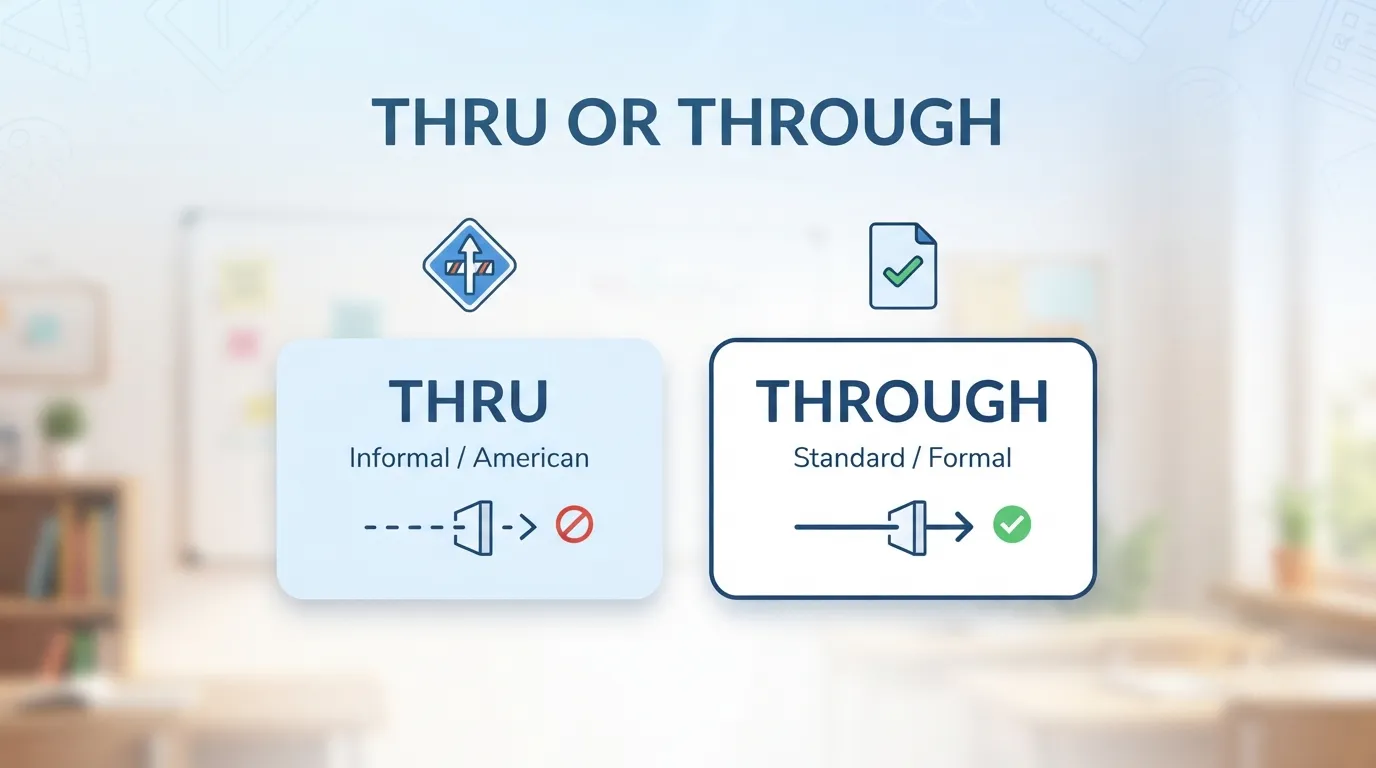
Thru or through means you are choosing between an informal spelling and the standard spelling. The correct choice for most writing is “through,” while “thru” is mainly used in casual text, signs, and short labels.
Have you ever typed “thru” because it felt faster?
I see this mistake often in student essays, website copy, emails, and social posts. The writer usually understands the meaning. They just aren’t sure if thru is a real word or a lazy spelling.
That confusion makes sense. You see drive-thru on signs. You see thru in text messages. Then your grammar checker may suggest through. So which one is right?
The short answer is simple. Through is the safe spelling. Thru is informal. It can work in casual places, but it usually looks wrong in essays, business emails, reports, and professional content.
This guide will explain thru or through in plain English. You’ll learn the meaning, the difference, the correct usage, common mistakes, and real examples. By the end, you’ll know exactly which version to use.
Thru or Through: Quick Answer
Use “through” in almost all normal writing because it is the standard spelling. Use “thru” only in informal text, branding, signage, or short labels. Merriam-Webster lists “thru” as a less common spelling of “through,” but that does not make it the best choice for formal writing. (Merriam-Webster)
Simple examples:
- Correct: I walked through the door.
- Informal: I’ll text you thru the app.
- Common sign style: Drive-thru open until midnight.
If you are writing for school, work, SEO content, or a client, choose through.
The Origin / Background of Thru or Through
The spelling “thru” is not new, but it became known as a shorter spelling of “through.” Some spelling reformers supported simpler forms like “thru” and “tho.” Still, standard English kept “through” as the accepted spelling for most formal and professional use.
Merriam-Webster notes that thru and similar short forms have appeared for a long time. Their use became more visible in the late 19th and early 20th centuries because some people wanted simpler English spellings. Today, thru is mostly informal. (Merriam-Webster)
The word through has an older and more accepted place in English. Cambridge defines through as movement “from one end or side of something to the other,” and also from the start to the end of a time or process. (Cambridge Dictionary)
That is why through works in many situations:
- movement through a place
- time through a period
- progress through a process
- connection through a system
- completion through effort
Thru may be shorter, but through is still the spelling readers expect in polished writing.
Thru or Through Explained: Key Differences or Variations
The main difference is tone, not meaning. “Through” is the standard spelling. “Thru” is the informal spelling. Both can point to the same idea, but they do not feel the same to readers. Your choice depends on where the word appears and who will read it.
| Term | Meaning | When to Use | Region/Context |
| Through | From one side to another, or from start to finish | Essays, emails, reports, blogs, formal writing | Standard English |
| Thru | Informal spelling of through | Texts, signs, casual notes, brand names | Informal or space-saving use |
| Drive-through | A service lane where customers stay in a car | Formal or dictionary spelling | Restaurants, banks, pharmacies |
| Drive-thru | Short sign-style form of drive-through | Signs, menus, branding | Casual commercial use |
Cambridge also labels thru as a US non-standard form in its entry for through. That means readers may understand it, but it is not the best choice for careful writing. (Cambridge Dictionary)
Think of it this way:
- Through sounds complete and professional.
- Thru sounds short, casual, and sign-like.
If you are not sure, use through.
Which Version Should You Use?
Use “through” when your writing needs trust, clarity, or a professional tone. Use “thru” when the space is limited or the style is casual. In most cases, especially for students, bloggers, and business writers, “through” is the better and safer version.
Here is the practical rule:
- For students: use through in essays and assignments.
- For blog writers: use through in articles and headings.
- For business emails: use through to sound professional.
- For social media captions: thru can work if your tone is casual.
- For signage and menus: thru may work because it is short.
- For global readers: use through because it is clearer and standard.
Examples:
- School essay: The character changes through the story.
- Business email: We will review the files through the shared folder.
- Casual text: I’ll send it thru WhatsApp.
- Sign: Drive-thru pickup available.
For SEO content, choose through unless the keyword itself is thru. If your keyword is drive thru, you can use that phrase naturally, then explain the standard spelling where needed.
Common Mistakes with Thru or Through
Most mistakes happen when writers use “thru” in places that need a formal tone. Another common error is mixing “through,” “threw,” and “thorough.” These words look or sound similar, but they do not mean the same thing.
| Mistake | Correction | Why It Happens |
| I went thru the report. | I went through the report. | “Thru” feels faster to type |
| She threw the process. | She went through the process. | “Threw” sounds like “through” |
| Read it thorough the end. | Read it through to the end. | “Thorough” looks similar |
| Submit it thru email. | Submit it through email. | Casual spelling used in formal writing |
| We walked throw the park. | We walked through the park. | Sound-based spelling mistake |
Mistake 1: Using “thru” in formal writing
Wrong:
The manager reviewed the proposal thru the online portal.
Better:
The manager reviewed the proposal through the online portal.
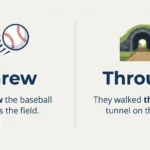
Mistake 2: Confusing “through” and “threw”
Wrong:
I threw the tunnel.
Correct:
I walked through the tunnel.
Threw is the past tense of throw. It means you tossed something.
Mistake 3: Confusing “through” and “thorough”
Wrong:
Please check the file throughly.
Correct:
Please check the file thoroughly.
Thorough means complete or careful. Through means across, by way of, or from start to finish.
Thru or Through in Real-World Examples
The best way to learn “thru or through” is to see both spellings in real writing. “Through” fits professional, academic, and formal content. “Thru” fits short messages, signs, slogans, and casual brand-style copy.
Professional email example
Hi Mark,
I reviewed the contract through the client portal.
Please let me know if you want me to check the final version again.
This sounds clean and professional.
News headline example
City Plans New Road Safety Checks Through Summer
This works because news headlines usually use standard spelling.
Social media post example
Getting thru Monday with coffee and a long playlist.
This sounds casual and friendly. It fits a relaxed social tone.
Formal document example
All requests must be submitted through the official application system.
This is the correct choice for policies, forms, and reports.
Sign or menu example
Drive-thru pickup available here.
This works because signs often use shorter spellings.
Thru or Through: Data, Trends & Usage
The search intent behind “thru or through” is informational. Most readers want to know which spelling is correct, whether “thru” is a real word, and if they can use it in formal writing. The answer depends on tone, context, and audience.
People often search this phrase because they see both spellings in real life.
You may see thru in:
- drive-thru signs
- text messages
- app labels
- short ads
- brand names
- casual captions
You should use through in:
- school essays
- professional emails
- reports
- resumes
- website articles
- legal documents
- academic writing
This matters now because people write across many channels. A word that works in a text message may not work in a job application. A spelling that fits a fast-food sign may look weak in a formal report.
For content writers, this difference is also important for trust. Readers may not complain about thru, but many will notice it. If your goal is clear, polished, helpful writing, through is the better choice.
Thru or Through Comparison Table
A quick comparison makes the choice easier. “Through” is the standard spelling for almost every serious writing task. “Thru” is useful only when your tone is casual or when space matters, such as on signs, buttons, and short messages.
| Term/Variant | Meaning | Region/Context | Best Used When |
| Through | From one side to another or from start to finish | Standard English | Writing essays, emails, articles, and reports |
| Thru | Informal spelling of through | Casual English, signs, branding | Writing texts, labels, slogans, or short captions |
| Drive-through | Standard spelling for car-based service | Formal writing | Writing reports, articles, or business pages |
| Drive-thru | Short commercial spelling | Signs and menus | Writing ad copy, signs, or casual local pages |
| Threw | Past tense of throw | General English | Talking about tossing something |
| Thorough | Complete, careful, detailed | Formal and general English | Describing a careful check or review |
FAQs About Thru or Through
Q: What does thru or through mean?
A: Thru or through is a spelling choice. Through is the standard spelling. Thru is an informal spelling with the same basic meaning in casual use.
Q: Is thru a real word?
A: Yes, thru appears in dictionaries as a less common spelling of through. But it is informal, so it is not the best choice for formal writing. (Merriam-Webster)
Q: How do you use through correctly?
A: Use through when something moves from one side to another, continues from start to finish, or happens by way of something. Example: “We walked through the park.”
Q: Thru vs through: what’s the difference?
A: The meaning is often the same, but the style is different. Through is standard and professional. Thru is short and casual.
Q: Is thru acceptable in formal writing?
A: No, it is better to avoid thru in formal writing. Use through in essays, reports, emails, resumes, and official documents.
Q: Which version is correct: thru or through?
A: Through is the correct standard spelling. Thru is acceptable only in informal writing, signs, branding, or casual text.
Q: Can I use thru in a blog post?
A: You can use thru if it is part of a keyword, brand name, or casual phrase. For normal blog writing, through looks more professional.
Conclusion
Now you know the real difference between thru or through.
The best choice is through for almost every serious writing task. It is standard, clear, and accepted in schools, offices, blogs, reports, and formal documents. Thru is not always wrong, but it is informal. It works better in text messages, signs, short labels, and casual brand copy.
Remember the simple rule:
- Use through for professional writing.
- Use thru for casual or sign-style writing.
- Avoid thru in essays, reports, resumes, and business emails.
If you want your writing to look polished, don’t overthink it. Choose through.
Now you know exactly how to use thru or through. Try checking your next email, caption, or article and see which spelling fits best.
Read More: Wether or Not: The Easy Correct Spelling Guide

Muhammad Afzal is a language content writer specializing in English grammar, word usage, and vocabulary distinctions. With a strong command of linguistic nuance, Muhammad Afzal focuses on simplifying commonly confused word pairs to help readers communicate with clarity and confidence.