Wether or not is usually a misspelling of whether or not. The correct phrase is “whether or not,” which means “if something happens or does not happen” or “no matter which option is true.”
Have you ever typed “wether or not” and stopped for a second?
I’ve seen this mistake many times while checking student essays, emails, and blog drafts. The writer usually knows what they want to say. They want to talk about a choice, a doubt, or two possible results. But one missing h changes the whole word.
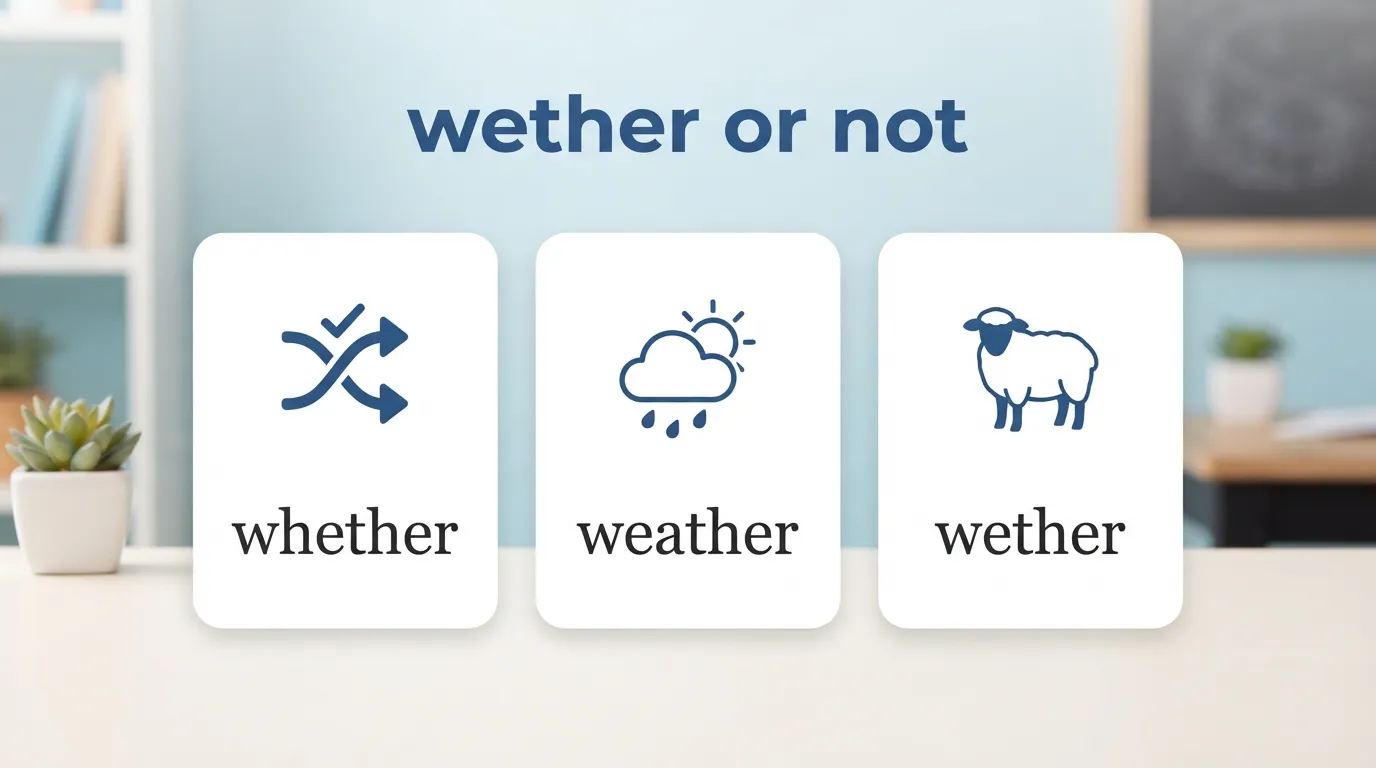
That’s why this phrase feels confusing. Whether, weather, and wether sound almost the same. Yet they mean very different things. One is about choices. One is about the sky. One is about a sheep.
So, which one should you use?
This guide will make it simple. You’ll learn what wether or not means, why it is usually wrong, when to use whether or not, and how to avoid common spelling mistakes. You’ll also see real examples for emails, social media, reports, and formal writing.
Let’s clear it up in plain English.
Wether or Not: Quick Answer
Wether or not is not the correct phrase for choices or doubt. The correct phrase is whether or not. Use whether when you mean “if one thing happens or another thing happens.” Wether is a real word, but it means a castrated male sheep or goat. (Merriam-Webster)
Simple examples:
- Correct: Whether or not you agree, we must decide today.
- Wrong: Wether or not you agree, we must decide today.
Here is an easy way to remember it:
- Whether = choice
- Weather = rain, sun, wind
- Wether = animal term
So, if your sentence is about a decision, condition, doubt, or option, write whether.
The Origin / Background of Wether or Not
The confusion comes from sound. Whether, weather, and wether are pronounced in a very similar way. Because of this, many people spell the phrase by ear. But spelling matters here because each word has its own meaning and use.
The word whether is used when we talk about choices, doubt, or possible results. Cambridge explains whether as a word used when reporting questions or showing doubt, such as “I wasn’t sure whether you’d like it.” (Cambridge Dictionary)
The phrase whether or not adds the second side of the choice. It shows that something may happen, or it may not happen.
For example:
I don’t know whether or not she will come.
This means:
I don’t know if she will come, or if she will not come.
The word wether is much less common. It belongs to farming and livestock language. Merriam-Webster defines wether as a male sheep castrated before sexual maturity, and also as a castrated male goat. (Merriam-Webster)
That is why wether or not looks close to the right phrase, but it does not carry the right meaning.
Wether or Not Explained: Key Differences or Variations
The main difference is meaning. Whether is used for choices. Weather is used for atmospheric conditions. Wether is an animal-related noun. The phrase you almost always need in writing is whether or not, not wether or not.
| Term | Meaning | When to Use | Region/Context |
| Whether | Used for choices, doubt, or alternatives | When asking about two possible results | General English |
| Whether or not | Means “if yes or no” or “no matter what” | When both outcomes are possible | General, formal, and casual English |
| Weather | The state of the air, such as rain or sun | When talking about climate or daily conditions | General English |
| Wether | A castrated male sheep or goat | In farming or animal care contexts | Agricultural English |
Merriam-Webster explains whether or not as a phrase used to mean “if it is or was true that,” or to show that something happens without being affected by the result. (Merriam-Webster)
Examples:
- Whether you like it or not, the rule still applies.
- The weather is cold today.
- The farmer checked the wether in the field.
Most writers only need whether and weather in daily writing. Wether is rare unless you write about sheep, goats, or farming.
Which Version Should You Use?
Use whether or not when your sentence is about two possible outcomes. Use whether alone when “or not” is already clear. Do not use wether or not unless you are somehow talking about an animal, which is almost never the case in normal writing.
Here is the best practical advice:
- For students → use whether or not when writing about doubt or choice.
- For blog writers → use whether if the sentence is cleaner without “or not.”
- For business emails → use whether or not when you want to sound clear and direct.
- For formal reports → use whether when the second option is already understood.
- For global readers → use whether or not because it is easy to understand.
Examples:
Correct:
Please confirm whether or not you can attend the meeting.
Also correct:
Please confirm whether you can attend the meeting.
Both sentences work. The second one is shorter and often better.
Cambridge notes that or not can appear right after whether or later in the sentence. For example, both “whether or not he comes” and “whether he comes or not” can work. (Cambridge Dictionary)
So you can write:
- Whether or not we win, we’ll learn something.
- Whether we win or not, we’ll learn something.
Both are correct.
Common Mistakes with Wether or Not
The most common mistake is spelling whether as wether. Another common error is mixing whether with weather. Some writers also add “or not” when it is not needed. These mistakes happen because the words sound alike and the sentence still feels natural when spoken.
| Mistake | Correction | Why It Happens |
| Wether or not you agree | Whether or not you agree | “Wether” sounds like “whether” |
| The whether is nice | The weather is nice | Weather and whether sound alike |
| I don’t know weather to go | I don’t know whether to go | The sentence is about choice |
| Whether or not or not | Whether or not | Repeated phrase |
| I asked if or not he came | I asked whether or not he came | “If or not” sounds awkward in formal writing |
Mistake 1: Using “wether” for a choice
Wrong:
I don’t know wether or not I should apply.
Correct:
I don’t know whether or not I should apply.
Mistake 2: Using “weather” for a decision
Wrong:
Tell me weather you agree.
Correct:
Tell me whether you agree.
Mistake 3: Using “or not” too often
Wordy:
I am unsure whether or not this is necessary.
Cleaner:
I am unsure whether this is necessary.
“Or not” is not always wrong. But you can remove it when the meaning is already clear.
Wether or Not in Real-World Examples
The correct phrase appears in many everyday writing situations. You may use whether or not in emails, headlines, reports, and social posts. It helps readers understand that two possible results are being considered.
Professional email example
Hi Sarah,
Please let me know whether or not you can join the meeting on Friday.
If you are busy, I can send the notes later.
This is clear and polite.
News headline example
Council to Decide Whether or Not New Parking Rules Will Start This Month
This works because the headline is about a public decision.
Social media post example
Whether or not you feel ready, taking the first step still counts.
This sounds natural and motivational.
Formal report example
The team reviewed whether or not the new policy would reduce delays.
This is fine in formal writing. You could also make it shorter:
The team reviewed whether the new policy would reduce delays.
Both versions are correct.
Wether or Not: Data, Trends & Usage
People search for wether or not because they are checking spelling, not meaning. The real question is usually “Is wether or whether correct?” This search has informational intent because the reader wants a quick grammar answer with examples.
This keyword matters because small spelling errors can hurt trust.
That is especially true in:
- School essays
- Business emails
- Job applications
- Blog posts
- Reports
- Website copy
- Social media captions
Readers may still understand your sentence if you write wether or not. But the mistake can make the writing look careless.
The search intent is mainly informational. People want to know:
- Which spelling is correct?
- What does the phrase mean?
- Is “wether” a real word?
- Can I use “whether or not” in formal writing?
- Is “or not” always needed?
The useful answer is simple: write whether or not when you mean a choice or possible outcome. Use wether only in farming or animal contexts.
Wether or Not Comparison Table
The best way to avoid this mistake is to compare the words side by side. Once you connect each spelling with its meaning, the correct choice becomes easy. Whether is for options. Weather is for climate. Wether is for livestock.
| Term/Variant | Meaning | Region/Context | Best Used When |
| Wether or not | Usually a misspelling | Informal search query | Avoid in normal writing |
| Whether or not | If something happens or does not happen | General English | Talking about two possible outcomes |
| Whether | If, or if not | General and formal English | When “or not” is understood |
| Weather | Rain, sun, wind, temperature | Daily life, news, climate | Talking about outdoor conditions |
| Wether | Castrated male sheep or goat | Farming and livestock | Writing about animals |
FAQs About Wether or Not
Q: What does wether or not mean?
A: Wether or not is usually a misspelling of whether or not. The correct phrase means “if something happens or does not happen.”
Q: Is wether or not correct?
A: No, not for normal English usage. Use whether or not when you are talking about a choice, doubt, or possible result.
Q: What is the difference between wether and whether?
A: Whether is used for choices or doubt. Wether means a castrated male sheep or goat, so it does not fit most everyday sentences.
Q: Is whether or not formal?
A: Yes, whether or not is acceptable in formal writing. In very polished writing, you can often use whether alone if the meaning is clear.
Q: Which is correct: wether or whether?
A: Whether is correct when you mean “if” or “if not.” Wether is only correct when you mean a specific type of male sheep or goat.
Q: Where does wether come from?
A: Wether is an old animal-related word used in livestock contexts. Today, it is rare outside farming or animal care writing.
Q: Can I use whether or not in an email?
A: Yes. For example, “Please confirm whether or not you can attend” is correct, polite, and easy to understand.
Conclusion
Now you know the difference between wether or not and whether or not.
The short answer is simple: wether or not is usually wrong. The correct phrase is whether or not. Use it when you are talking about a choice, doubt, or two possible results.
Remember these three meanings:
- Whether means choice.
- Weather means sky conditions.
- Wether means a type of sheep or goat.
If you are writing an essay, email, blog post, or report, you almost always need whether, not wether. You can write whether or not when both outcomes matter. You can also write whether alone when the “or not” part is already clear.
A small spelling fix can make your writing look much cleaner.
Bookmark this guide so you never second-guess wether or not again.
Read More: Tieing or Tying: Which Spelling Is Correct?

Luqman Aleem holds a strong academic foundation in English language and linguistics. Luqman Aleem researches and writes in-depth comparisons of frequently misused words, drawing on formal grammar rules and real-world usage patterns to guide readers toward correct English.