Momma or mama means you are choosing between two informal words for mother. Both can be correct, but “mama” is more widely used and more standard, while “momma” feels more casual, affectionate, or American.
Have you ever typed “momma” in a message and wondered if “mama” would look better?
I’ve seen this question many times in captions, Mother’s Day posts, birthday wishes, children’s writing, song lyrics, and family messages. The confusion is easy to understand. Both words sound warm. Both refer to a mother. Both can feel loving and personal.
But they do not always feel the same.
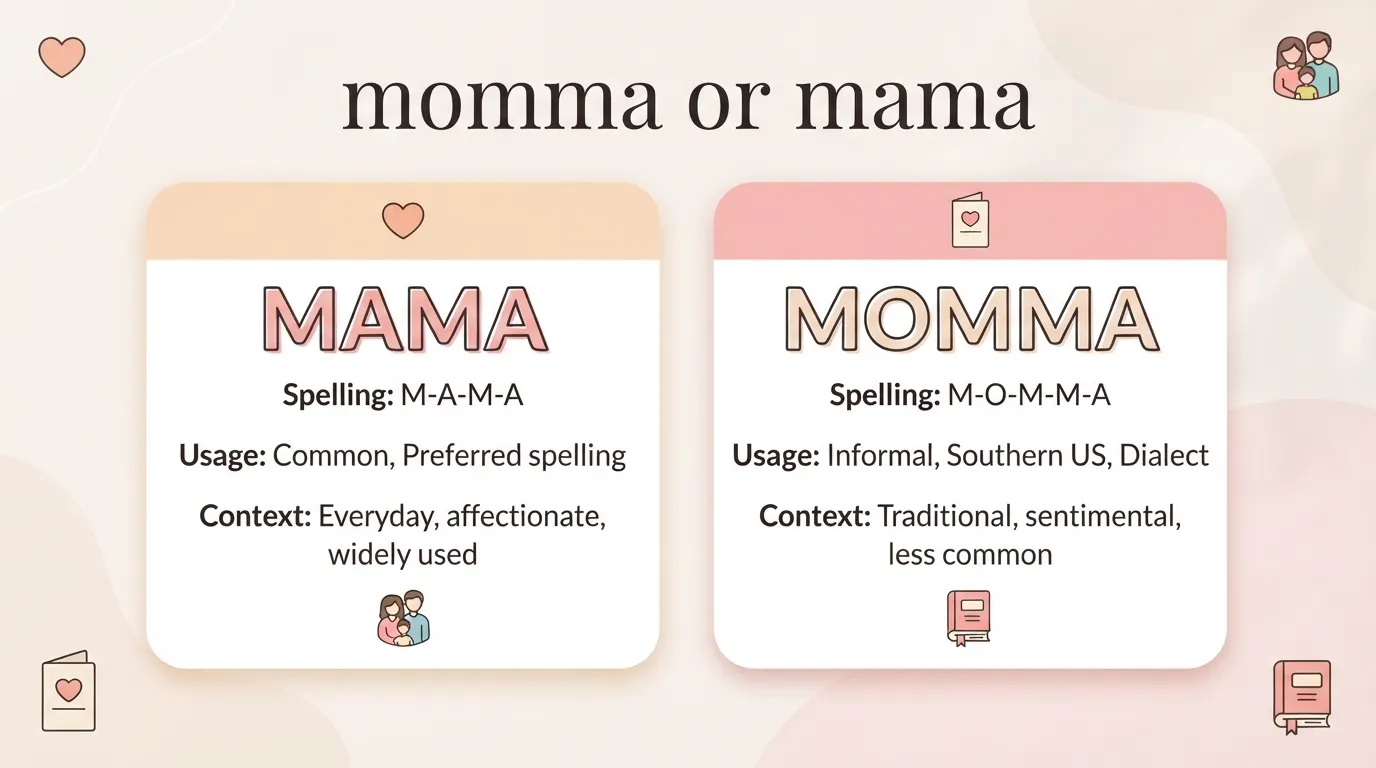
Mama is the simpler and more widely recognized spelling. Momma is also used, especially in American English, but it often feels more casual, emotional, or regional. Some people use mama because it feels classic. Others use momma because it matches how they speak at home.
This guide explains momma or mama in simple English. You’ll learn the meaning, difference, best spelling, common mistakes, real examples, and when to use each word in personal, casual, and formal writing.
Momma or Mama: Quick Answer
Use “mama” when you want the more common and widely recognized spelling for mother. Use “momma” when you want a casual, affectionate, or American-style spelling. In formal writing, use “mother” or “mom” instead.
Cambridge defines mama as a child’s word for mother and also lists momma as another form. Cambridge also defines momma as an informal US word for mother.
Simple examples:
- Correct: I love you, Mama.
- Correct: My momma always believed in me.
- Formal: My mother raised three children.
- Casual US: My mom is coming over.
Easy rule:
- Mama = widely used and simple
- Momma = casual, warm, often American
- Mother = formal
- Mom = common US informal word
The Origin / Background of Momma or Mama
The words “mama” and “momma” come from family speech and child language. Many languages have similar mother words because babies often make simple “m” sounds early. In English, both words are affectionate, but “mama” is usually the cleaner spelling.
The word mama is widely recognized as a familiar word for mother. Merriam-Webster lists mama as meaning mother and notes mamma and momma as less common variants.
That matters because mama is often the default spelling in dictionaries, children’s books, family writing, songs, and warm personal messages.
Momma is also real, but it has a different feel. Cambridge marks momma as US and informal.
So the difference is not about right versus wrong in every case. It is more about tone and audience.
Think of it this way:
- Mama feels soft, simple, and widely understood.
- Momma feels extra casual, Southern-style, personal, or emotional in some contexts.
- Mom feels everyday and American.
- Mother feels formal or serious.
That is why the best spelling depends on what you are writing.
Momma or Mama Explained: Key Differences or Variations
The main difference is style. “Mama” is the more standard informal form. “Momma” is also used, but it feels more casual and strongly tied to American informal speech. Both can express love, closeness, and family feeling.
| Term | Meaning | When to Use | Region/Context |
|---|---|---|---|
| Mama | Informal word for mother | Family messages, children’s writing, captions | Widely understood |
| Momma | Informal word for mother | Warm casual writing, emotional speech, song-like tone | Mainly US informal |
| Mom | Informal word for mother | Everyday speech and writing | US informal |
| Mother | Formal word for female parent | Essays, documents, formal writing | Standard English |
| Mamma | Variant spelling of mama | Older, literary, or stylized use | Less common |
Cambridge describes mama as UK old-fashioned or US informal, while momma is listed as informal for mother in US English.
Examples:
- Mama, can I have some water?
- My momma taught me to be strong.
- My mom called this morning.
- My mother signed the form.
All four can refer to the same person. The feeling changes with the word.
Which Version Should You Use?
Use “mama” if you want a safe, warm, and widely accepted spelling. Use “momma” if you want a more casual, emotional, American-style voice. Use “mother” in formal writing and “mom” for everyday American English.
Here is the best practical advice:
- For Mother’s Day messages → use Mama or Momma, based on family style.
- For children’s stories → use Mama because it is simple and familiar.
- For song lyrics or poems → use Momma if you want a warm, spoken feel.
- For school essays → use mother unless you are quoting speech.
- For social media captions → use the word that matches your real family voice.
- For business or legal forms → use mother, not mama or momma.
- For US casual writing → mom, mama, and momma can all appear, but not in the same tone.
Examples:
- Sweet caption: Happy birthday, Mama.
- Emotional caption: My momma gave me everything.
- Formal sentence: My mother is my emergency contact.
- Everyday sentence: My mom is picking me up.
If you are unsure, choose mama for warm casual writing and mother for formal writing.
Common Mistakes With Momma or Mama
Most mistakes happen when writers use a very casual family word in formal writing. Another mistake is thinking “momma” is always wrong. It is not always wrong, but it is informal and should match the tone of the sentence.
| Mistake | Correction | Why It Happens |
|---|---|---|
| My momma is listed on the legal form. | My mother is listed on the legal form. | Formal context needs formal wording |
| Mama is always more correct than momma. | Mama is more standard, but momma is used too. | Writers confuse standard with only correct |
| Mixing mama, momma, and mother in one short caption | Pick one tone | The writing feels inconsistent |
| Writing “moma” | Write mama or momma | Missing letter |
| Lowercasing a direct family title | Write Mama when used like a name | Title-style use needs capitalization |
Mistake 1: Using “momma” in formal writing
Wrong for formal writing:
My momma is my legal guardian.
Better:
My mother is my legal guardian.
Use mother when the setting is official, academic, medical, or legal.
Mistake 2: Thinking “momma” is fake
Momma is not fake. It appears in dictionary entries as an informal word for mother, especially in US English.
But it is still casual. It does not fit every sentence.
Mistake 3: Forgetting capitalization
If the word is used like a name, capitalize it.
Correct:
- I love you, Mama.
- Thank you, Momma.
- Can I go outside, Mama?
If the word is a general noun, lowercase it.
Correct:
- My mama loves gardening.
- Her momma made dinner.
Momma or Mama in Real-World Examples
You can use mama or momma in personal writing, captions, dialogue, poems, and family messages. Use mother for formal writing. The right word depends on the tone you want: soft, casual, emotional, everyday, or formal.
Professional email example
Hi Ms. Carter,
My mother will attend the meeting with me tomorrow.
This is better than mama or momma because the email is professional.
Mother’s Day message example
Happy Mother’s Day, Mama. Thank you for your love, patience, and strength.
This sounds warm and respectful.
Emotional caption example
My momma taught me how to keep going, even when life felt heavy.
This has a personal and spoken feel.
Children’s story example
“Mama, can we bake cookies today?” the little girl asked.
This is natural for a child’s voice.
Formal document example
The child’s mother must sign the permission form.
This is the best choice for official writing.
Song-style line example
Momma said the road would be hard, but she never said I had to walk it alone.
This works because momma gives a strong emotional tone.
Momma or Mama: Data, Trends & Usage
The search intent behind “momma or mama” is informational. Most readers want to know which spelling is correct, which one is more common, and which word fits captions, family messages, stories, or formal writing.
People often search this phrase while writing:
- Mother’s Day captions
- birthday wishes
- baby shower cards
- children’s stories
- song lyrics
- poems
- social media posts
- family messages
- school assignments
The useful answer is simple:
Mama is the safer general spelling. Momma is informal and personal.
This topic matters because family words carry emotion. The spelling you choose can make the same sentence feel different.
Compare these:
- I love you, Mother.
- I love you, Mom.
- I love you, Mama.
- I love you, Momma.
All are correct in the right setting. But they do not feel the same.
For public writing, mama is usually clearer. For personal writing, use the spelling that feels true to your family.
Momma or Mama Comparison Table
A quick comparison makes the choice easier. “Mama” is warm and widely recognized. “Momma” is informal and affectionate. “Mom” is common in American English. “Mother” is best for formal or official writing.
| Term/Variant | Meaning | Region/Context | Best Used When |
|---|---|---|---|
| Mama | Informal word for mother | Wide informal use | Warm captions, stories, family messages |
| Momma | Informal word for mother | Mainly US informal | Emotional, casual, spoken-style writing |
| Mom | Informal word for mother | US English | Everyday conversation and casual writing |
| Mother | Female parent | Formal English | Essays, forms, reports, professional writing |
| Mamma | Variant of mama | Less common | Literary, older, or stylized writing |
| Mum | Informal word for mother | UK English | British-style everyday writing |
FAQs About Momma or Mama
Q: What does momma or mama mean?
A: Momma or mama is a spelling and style choice. Both words are informal ways to say mother.
Q: Is mama correct?
A: Yes. Mama is correct and widely recognized. Merriam-Webster defines mama as mother.
Q: Is momma correct?
A: Yes. Momma is also used, especially in informal US English. Cambridge defines momma as an informal word for mother.
Q: Momma vs mama: what’s the difference?
A: The meaning is almost the same. Mama is more standard and widely used. Momma feels more casual, affectionate, or American.
Q: Should I write mama or momma in a caption?
A: Use the word that matches your voice. Mama feels simple and classic. Momma feels more emotional and spoken.
Q: Is momma formal?
A: No. Momma is informal. Use mother in formal writing, school essays, official forms, and professional messages.
Q: Should Mama be capitalized?
A: Capitalize Mama when you use it like a name, such as “I love you, Mama.” Use lowercase when it is a general noun, such as “my mama.”
Conclusion
Now you know the difference between momma or mama.
The short answer is simple. Both words can mean mother, and both can be used in warm personal writing. But mama is the more common and widely accepted spelling. Momma is more casual, emotional, and often American in feel.
Use mama for a soft, clear, family-friendly word. Use momma when you want a more spoken, heartfelt, or regional tone. Use mother when the writing is formal. Use mom for everyday American English.
Remember this simple rule:
- Mama = warm and widely used
- Momma = casual and affectionate
- Mom = everyday US English
- Mother = formal
Now you know exactly how to use momma or mama. Choose the word that fits your tone, your audience, and your real family voice.

Hassan Afzal has a background in English language instruction and writes to help non-native speakers and students master tricky grammar rules and word choices. Hassan Afzal’s writing style blends practical examples with clear explanations for everyday English learners.