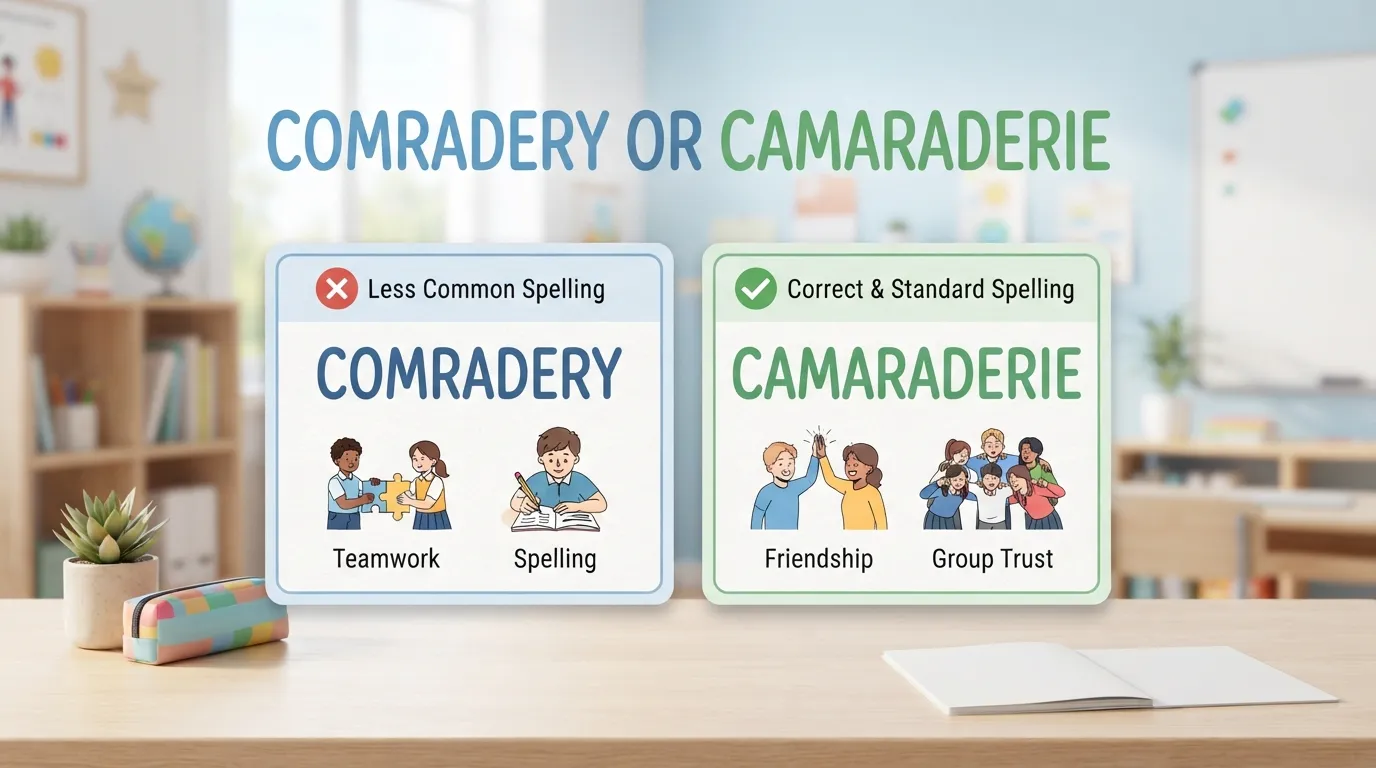
Comradery or camaraderie means you are choosing between two spellings for friendly group spirit. “Camaraderie” is the standard and more common spelling, while “comradery” is accepted but less common.
Have you ever written “comradery” and wondered if “camaraderie” looked more correct?
This is a common spelling question. Both words point to the same warm idea: friendship, trust, and good feeling inside a group. You may use the word when talking about a sports team, military unit, workplace, school group, club, or close community.
The problem is that camaraderie looks harder to spell. It has extra letters and a French-looking style. Comradery looks easier because it is linked to comrade. That makes many writers choose it naturally.
But in most professional writing, camaraderie is the better choice. It is the more standard spelling and the one most readers expect. Comradery is not fake, but it is less common and can look like a mistake to some readers.
This guide explains comradery or camaraderie in simple English. You’ll learn the meaning, spelling difference, examples, common mistakes, and which version to use in essays, emails, stories, and workplace writing.
Comradery or Camaraderie: Quick Answer
Use “camaraderie” in most writing. It is the standard spelling for a feeling of friendliness, goodwill, and closeness among people in a group. “Comradery” means the same thing, but it is less common.
Merriam-Webster defines camaraderie as a feeling of friendliness, goodwill, and familiarity among people in a group. It defines comradery with the same meaning and points it back to camaraderie.
Simple examples:
- Correct: The team had strong camaraderie.
- Also correct but less common: The team had strong comradery.
- Better for formal writing: The staff built real camaraderie.
- More casual: There was great comradery among the players.
Easy rule:
- Camaraderie = best standard spelling
- Comradery = accepted but less common
- Comradeship = similar word for friendship in a group
The Origin / Background of Comradery or Camaraderie
The confusion happens because both words are related to group friendship. “Camaraderie” has a French history, while “comradery” was formed from “comrade” plus the ending “-ry.”
Merriam-Webster explains that camaraderie came through Middle French, where camarade meant a roommate, companion, or group sharing a room. It also explains that comradery means the same thing but came from comrade plus -ry.
That background helps explain why both words feel connected.
A comrade is a companion, close associate, or fellow member of a group. Merriam-Webster defines comrade as an intimate friend or associate.
So comradery makes sense as a word. It looks like:
comrade + ry = comradery
But common usage still favors camaraderie in polished writing.
That is why you will often see:
- team camaraderie
- workplace camaraderie
- military camaraderie
- school camaraderie
- locker-room camaraderie
- group camaraderie
Use camaraderie when you want the safest spelling.
Comradery or Camaraderie Explained: Key Differences or Variations
The main difference is spelling preference. “Camaraderie” is the standard and more common spelling. “Comradery” is a real variant, but it is less common and may look less polished in formal writing.
| Term | Meaning | When to Use | Region/Context |
|---|---|---|---|
| Camaraderie | Friendly group feeling | Most formal and general writing | Standard English |
| Comradery | Same meaning as camaraderie | Casual or variant use | Less common spelling |
| Comradeship | Friendship among people in the same group | Formal or older-style writing | Group loyalty |
| Fellowship | Friendly connection in a group | Community, church, school, clubs | Warm group bond |
| Team spirit | Positive feeling inside a team | Sports and work | Simple everyday wording |
Cambridge defines camaraderie as a feeling of friendliness toward people you work with or share an experience with.
Oxford defines comradeship as friendship between people who are members of the same group, such as soldiers or people who work together.
Examples:
- The players developed strong camaraderie during the season.
- The soldiers shared a deep sense of comradeship.
- The office had friendly team spirit.
- The group built real fellowship through service.
For most modern writing, camaraderie is the best word.
Which Version Should You Use?
Use “camaraderie” in essays, articles, emails, business writing, resumes, stories, and formal content. Use “comradery” only if you want a simpler, less formal variant or if it matches a quoted phrase or brand voice.
Here is the best practical advice:
- For school essays → use camaraderie.
- For business writing → use camaraderie.
- For sports articles → use camaraderie.
- For military or team writing → use camaraderie.
- For casual captions → comradery may work, but camaraderie is safer.
- For SEO content → mention both, but use camaraderie as the main spelling.
- For simple writing → use team spirit if the word feels too hard.
Good examples:
- The trip created a strong sense of camaraderie.
- The team’s camaraderie helped them stay focused.
- Good managers build trust and camaraderie.
- The club was known for its warmth and camaraderie.
If you are unsure, choose camaraderie. It is the spelling most readers expect.
Common Mistakes With Comradery or Camaraderie
Most mistakes happen because writers spell the word by sound. “Camaraderie” can be hard to spell, so people write “comradery,” “cameraderie,” or “comraderie.” The safest spelling in formal writing is “camaraderie.”
| Mistake | Correction | Why It Happens |
|---|---|---|
| Strong comraderie | Strong camaraderie | Missing letters |
| Team cameraderie | Team camaraderie | Sound-based spelling |
| Great comradary | Great camaraderie | Wrong ending |
| Formal report uses comradery | Use camaraderie | Standard spelling looks better |
| Saying comradery is always wrong | It is accepted but less common | Variant spelling exists |
Mistake 1: Thinking comradery is always wrong
Comradery is not always wrong. Merriam-Webster lists it as a word with the same meaning as camaraderie.
Still, many readers expect camaraderie, especially in formal content.
Mistake 2: Misspelling camaraderie
Wrong:
The team had strong comraderie.
Correct:
The team had strong camaraderie.
The correct spelling has cama at the start, not comra.
Mistake 3: Using the word where simpler wording is better
Sometimes team spirit or friendship is clearer.
More formal:
The project created a strong sense of camaraderie.
Simpler:
The project helped the team build trust and friendship.
Both can work. Choose the one that fits your reader.
Comradery or Camaraderie in Real-World Examples
You can use comradery or camaraderie correctly by checking tone. “Camaraderie” works best in polished writing. “Comradery” may work in casual writing, but it is less expected.
Professional email example
Hi team,
The retreat helped build trust, communication, and camaraderie across departments.
This sounds professional and natural.
Sports writing example
The players’ camaraderie was clear after a long season of training together.
This is the standard spelling for sports content.
Casual caption example
Long road trips, bad coffee, and good camaraderie.
This works well for a warm social caption.
Military-style example
The soldiers formed deep camaraderie through shared hardship and responsibility.
This fits serious group writing.
Workplace example
A healthy workplace needs respect, clear communication, and real camaraderie.
This is clear for business writing.
Variant spelling example
The group enjoyed the comradery of camping together.
This is understandable, but camaraderie would look more standard.
Comradery or Camaraderie: Data, Trends & Usage
The search intent behind “comradery or camaraderie” is spelling-focused. Most readers want to know which spelling is correct, whether “comradery” is a real word, and which one looks better in formal writing.
People often search this phrase while writing:
- essays
- team bios
- sports articles
- workplace posts
- military stories
- social captions
- group descriptions
- speeches
- leadership content
The key answer is simple:
Camaraderie is the best default. Comradery is accepted but less common.
This topic matters because comradery may look like a spelling mistake even when it is listed in dictionaries. If your goal is clean, trusted writing, camaraderie is usually the stronger choice.
Cambridge and Merriam-Webster both show camaraderie as a standard word for friendly group feeling. Merriam-Webster separately lists comradery with the same meaning, but camaraderie remains the better-known form.
For SEO and helpful content, include both spellings once or twice. Then use camaraderie as your main word.
Comradery or Camaraderie Comparison Table
A quick comparison makes the choice easy. Camaraderie is the standard spelling for friendly group spirit. Comradery is a less common variant. Both mean group friendliness, but camaraderie is safer for professional writing.
| Term/Variant | Meaning | Region/Context | Best Used When |
|---|---|---|---|
| Camaraderie | Friendliness and trust in a group | Standard English | Formal, school, business, sports, and general writing |
| Comradery | Same meaning as camaraderie | Less common variant | Casual writing or quoted wording |
| Comradeship | Friendship among group members | More formal or older style | Military, work, or group loyalty |
| Team spirit | Positive group energy | Simple everyday English | Sports, workplace, school teams |
| Fellowship | Warm friendship in a group | Community or religious settings | Clubs, church, service groups |
| Group bond | Connection among members | Plain English | Simple descriptions |
FAQs About Comradery or Camaraderie
Q: What does comradery or camaraderie mean?
A: Comradery or camaraderie refers to friendly feeling, trust, and closeness among people in a group.
Q: Is camaraderie correct?
A: Yes. Camaraderie is correct and is the standard spelling. Cambridge defines it as friendliness toward people you work with or share an experience with.
Q: Is comradery correct?
A: Yes, comradery is accepted, but it is less common. Merriam-Webster defines it as the same feeling of friendliness and goodwill among people in a group.
Q: Comradery vs camaraderie: what is the difference?
A: The meaning is almost the same. The difference is spelling and style. Camaraderie is standard and more common. Comradery is a less common variant.
Q: Which spelling should I use in formal writing?
A: Use camaraderie in formal writing. It looks more polished and is the spelling most readers expect.
Q: Why is camaraderie spelled that way?
A: Camaraderie has a French history. Merriam-Webster explains that it came through Middle French from a word meaning roommate or companion.
Q: What is a simpler word for camaraderie?
A: You can use team spirit, friendship, fellowship, or group bond, depending on the sentence.
Conclusion
Now you know the difference between comradery or camaraderie.
Both words can point to the same idea: friendly group spirit, trust, and shared connection. But camaraderie is the better spelling for most writing. It is standard, common, and polished.
Comradery is not fake. It is accepted as a variant, but it is less common. Some readers may think it looks wrong, especially in essays, articles, resumes, reports, and business writing.
Remember this simple rule:
- Camaraderie = standard spelling
- Comradery = less common variant
- Team spirit = simple everyday alternative
- Comradeship = similar but more formal word
If you are writing for school, work, sports, leadership, or public content, use camaraderie. It will look cleaner and more trusted.
Now you know exactly how to use comradery or camaraderie. Check your next sentence, essay, caption, or article before you publish it.

Zain Ali is an English content specialist with editorial experience in creating clear, accurate, and reader-friendly grammar guides. Zain is passionate about breaking down confusing English word pairs into simple, actionable explanations.