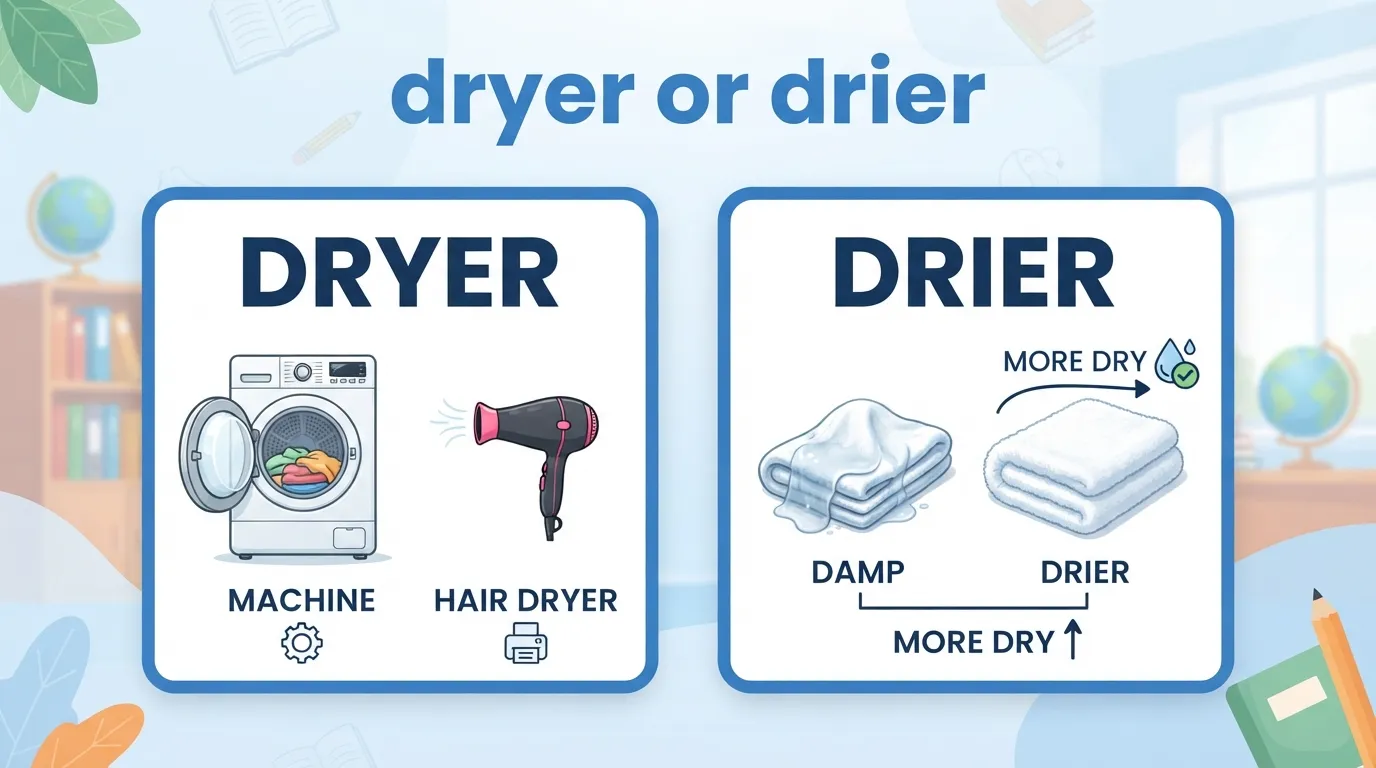
Dryer or drier means you are choosing between a machine and a comparison word. “Dryer” usually means a machine that dries things, while “drier” usually means more dry.
Have you ever written “clothes drier” and wondered if it should be “clothes dryer”?
This is a common spelling question. The words dryer and drier sound the same. They also come from the same root word, dry. But they are usually used in different ways.
A dryer is normally a machine or device that removes moisture. For example, a clothes dryer, hair dryer, hand dryer, or grain dryer.
Drier is usually the comparative form of dry. It means more dry. For example, “This towel is drier than that one.”
The tricky part is that some dictionaries also list drier as a possible noun for a drying device. But in everyday modern English, dryer is the safer spelling for the machine.
This guide explains dryer or drier in simple English. You’ll learn the meaning, difference, examples, common mistakes, and which spelling to use in product titles, school writing, and daily sentences.
Dryer or Drier: Quick Answer
Use “dryer” when you mean a machine or device that dries something. Use “drier” when you mean more dry. “Drier” can also appear as a noun in some dictionaries, but “dryer” is the better default for machines.
Cambridge defines dryer as a machine that dries things, including wet clothes turned in hot air. Cambridge defines drier as the comparative of dry and also notes that it can mean a dryer.
Simple examples:
- Correct: Put the clothes in the dryer.
- Correct: My hair dryer stopped working.
- Correct: This shirt is drier than the jeans.
- Correct: The air is drier today.
- Less common: Put the clothes in the drier.
- Better: Put the clothes in the dryer.
Easy rule:
- Dryer = machine or device
- Drier = more dry
- Dryest is wrong
- Driest = most dry
The Origin / Background of Dryer or Drier
The confusion comes from the word “dry.” When we compare dryness, we change “dry” to “drier” and “driest.” But when we name a machine that dries things, modern English usually uses “dryer.”
The word dryer works as a noun. It names something that dries.
Examples:
- clothes dryer
- hair dryer
- hand dryer
- tumble dryer
- grain dryer
- washer-dryer
Oxford Learner’s Dictionaries defines dryer as a machine for drying something and gives examples such as hairdryer and “Don’t put that sweater in the dryer.”
The word drier usually works as an adjective. It compares dryness.
Examples:
- This towel is drier.
- The desert is drier than the coast.
- My clothes are drier now.
- The weather feels drier in winter.
Merriam-Webster lists drier as the comparative of dry, while its noun entry notes that dryer is usually used for a device that dries something by heat or air.
So the words are related, but they have different main jobs.
Dryer or Drier Explained: Key Differences or Variations
The main difference is grammar. “Dryer” is usually a noun. It names a machine or device. “Drier” is usually an adjective. It compares one thing with another and means more dry.
| Term | Meaning | When to Use | Region/Context |
|---|---|---|---|
| Dryer | A machine that dries things | Clothes, hair, hands, grain | Standard modern use |
| Drier | More dry | Comparing dryness | Grammar and description |
| Hair dryer | Device that dries hair | Beauty and grooming | Common spelling |
| Clothes dryer | Machine that dries clothes | Laundry | Common spelling |
| Drier | Drying agent or device | Technical or less common noun use | Paint, industry, older usage |
| Driest | Most dry | Superlative form | Grammar |
Merriam-Webster defines dryer as something that extracts or absorbs moisture, a substance that speeds drying, or usually a device for drying.
That means dryer can describe more than a laundry machine. It can also describe a device or substance that helps remove moisture.
Still, for normal writing, the clean rule is this:
Use dryer for the machine. Use drier for “more dry.”
Which Version Should You Use?
Use “dryer” for most machines and devices. Use “drier” when comparing dryness. If you are writing product titles, store listings, appliance pages, or home guides, “dryer” is usually the spelling readers expect.
Here is the best practical advice:
- For laundry appliances → use dryer.
- For hair tools → use hair dryer.
- For bathroom devices → use hand dryer.
- For weather comparisons → use drier.
- For fabric comparisons → use drier.
- For product titles → use dryer.
- For grammar lessons → explain drier as the comparative form of dry.
Correct examples:
- The dryer is making a loud noise.
- I need a new hair dryer.
- The towels are drier after another cycle.
- This summer is drier than last summer.
- A hand dryer is mounted near the sink.
- The soil is drier in full sun.
If you are unsure, ask one question:
Am I naming a machine or comparing dryness?
If it is a machine, choose dryer. If it means more dry, choose drier.
Common Mistakes With Dryer or Drier
Most mistakes happen when writers use “drier” for the machine or “dryer” for the comparison word. The words sound the same, so the mistake is easy to make.
| Mistake | Correction | Why It Happens |
|---|---|---|
| Put the clothes in the drier. | Put the clothes in the dryer. | Machine spelling is confused |
| This towel is dryer than that one. | This towel is drier than that one. | Comparative form is confused |
| I bought a hair drier. | I bought a hair dryer. | Device spelling is confused |
| The air feels dryer today. | The air feels drier today. | “More dry” needs drier |
| This is the dryest towel. | This is the driest towel. | Superlative spelling is wrong |
Mistake 1: Using “drier” for the machine
Less common:
The clothes are in the drier.
Better:
The clothes are in the dryer.
Some dictionaries allow drier as a noun, but dryer is the normal spelling for the machine in modern everyday writing. Oxford lists dryer as the main noun and notes drier as another form.
Mistake 2: Using “dryer” for comparison
Wrong:
This blanket is dryer than the towel.
Correct:
This blanket is drier than the towel.
When you mean more dry, use drier.
Mistake 3: Forgetting “driest”
Wrong:
This is the dryest place in the house.
Correct:
This is the driest place in the house.
The comparative is drier. The superlative is driest.
Dryer or Drier in Real-World Examples
You can use dryer or drier correctly by checking the sentence job. If the word names a device, choose dryer. If it compares dryness, choose drier.
Laundry example
The clothes are still damp, so I put them back in the dryer.
This is correct because dryer names the machine.
Weather example
The air is drier in winter than in summer.
This is correct because drier means more dry.
Beauty example
My hair dryer has three heat settings.
This is correct because a hair dryer is a device.
Gardening example
The soil near the wall is drier than the soil under the tree.
This is correct because two levels of dryness are being compared.
Bathroom example
The restaurant has an automatic hand dryer near the sink.
This is correct because it names a device.
Product description example
This compact clothes dryer is designed for small apartments.
This is the better spelling for ecommerce and appliance writing.
Comparison sentence example
After ten more minutes, the towels were much drier.
This is correct because the towels became more dry.
Dryer or Drier: Data, Trends & Usage
The search intent behind “dryer or drier” is spelling-focused. Most readers want to know which spelling is correct for a machine and which spelling means more dry.
People often search this phrase while writing:
- appliance descriptions
- laundry guides
- product titles
- school assignments
- grammar worksheets
- weather descriptions
- hair tool reviews
- home improvement content
- ecommerce listings
The best answer is simple:
Dryer is the machine. Drier means more dry.
This topic matters more in product writing. A customer expects to see clothes dryer, hair dryer, or hand dryer. If a listing says hair drier, readers may still understand it, but it can look less familiar.
For grammar writing, drier is important because it is the correct comparative form of dry. Merriam-Webster’s dry entry lists drier as the comparative and driest as the superlative.
So the safest writing choice is:
- dryer for products and machines
- drier for comparisons
- driest for the most dry
Dryer or Drier Comparison Table
A quick comparison makes the choice easy. Dryer is usually the noun for a machine. Drier is usually the adjective that means more dry. Both exist, but they are not used the same way in most modern writing.
| Term/Variant | Meaning | Region/Context | Best Used When |
|---|---|---|---|
| Dryer | Machine or device that dries | Standard modern English | Talking about clothes, hair, or hand-drying machines |
| Drier | More dry | Standard grammar | Comparing dryness |
| Clothes dryer | Laundry machine | Home appliances | Talking about drying clothes |
| Hair dryer | Hair-drying device | Beauty and grooming | Talking about drying hair |
| Hand dryer | Bathroom drying device | Public restrooms | Talking about drying hands |
| Drier | Drying agent or less common noun | Technical or industrial use | Talking about paint, varnish, or substances |
| Driest | Most dry | Standard grammar | Comparing three or more things |
FAQs About Dryer or Drier
Q: What does dryer or drier mean?
A: Dryer or drier is a spelling and meaning choice. Dryer usually means a machine that dries things. Drier usually means more dry.
Q: Is dryer correct?
A: Yes. Dryer is correct when you mean a machine or device that dries something. Cambridge defines dryer as a machine that dries things.
Q: Is drier correct?
A: Yes. Drier is correct when you mean more dry. Cambridge defines drier as the comparative of dry.
Q: Dryer vs drier: what’s the difference?
A: Dryer is usually a noun for a drying machine. Drier is usually an adjective meaning more dry.
Q: Is it hair dryer or hair drier?
A: The better spelling is hair dryer. It names a device that dries hair.
Q: Is it clothes dryer or clothes drier?
A: The better spelling is clothes dryer. It is the common spelling for the laundry machine.
Q: Can drier mean a machine too?
A: Yes, some dictionaries list drier as another noun form for a drying machine. But dryer is the better default for most everyday and product writing.
Conclusion
Now you know the difference between dryer or drier.
The simple rule is this: use dryer for a machine or device that dries something. Use drier when you mean more dry.
Remember these examples:
- Put the clothes in the dryer.
- I need a new hair dryer.
- This towel is drier than that one.
- The air is drier today.
- This is the driest room in the house.
Drier can sometimes appear as a noun, but dryer is the spelling most readers expect for machines. That is why dryer is best for product pages, appliance guides, shopping listings, and everyday writing.
If the sentence names a device, choose dryer. If the sentence compares dryness, choose drier.
Now you know exactly how to use dryer or drier. Check your next sentence, product title, or grammar answer before you publish it.

Muhammad Afzal is a language content writer specializing in English grammar, word usage, and vocabulary distinctions. With a strong command of linguistic nuance, Muhammad Afzal focuses on simplifying commonly confused word pairs to help readers communicate with clarity and confidence.