Were or where means you are choosing between two different words. “Were” is a past tense form of “be,” while “where” is used to ask about or talk about a place.
Have you ever typed “where you there?” and felt something looked wrong?
I’ve seen this mistake many times in student essays, text messages, emails, and English worksheets. The sentence may sound close when spoken fast, but in writing, were and where do very different jobs.
That is why this pair confuses many learners. Both words are short. Both begin with w. Both appear in common questions. But one talks about being in the past, and the other talks about place.
The difference is simple once you see it.
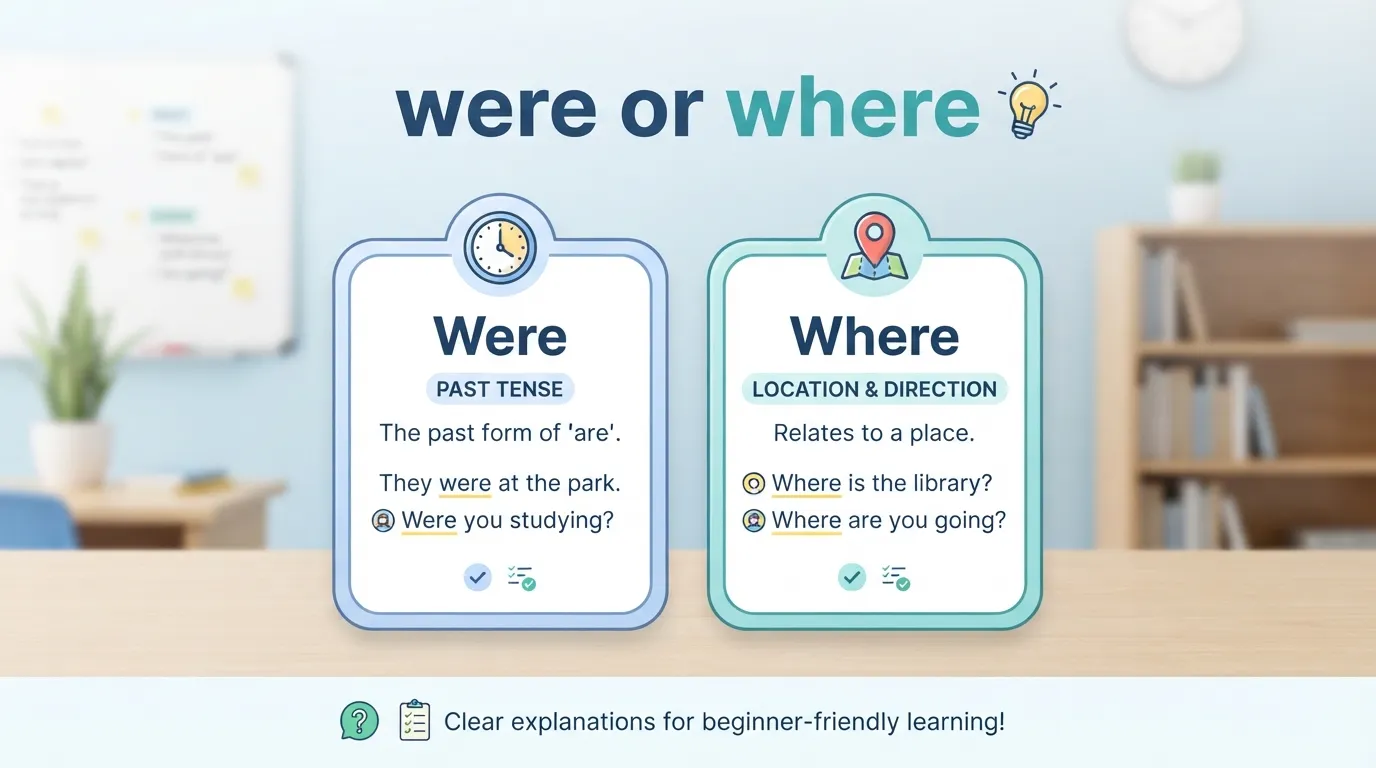
Were is used with people or things in the past. For example, “They were late.”
Where is used for location. For example, “Where are you?”
This guide explains were or where in simple English. You’ll learn the meaning, difference, common mistakes, real examples, and quick tests to choose the right word every time.
Were or Where: Quick Answer
Use “were” when the sentence talks about being, existing, or happening in the past. Use “where” when the sentence asks about or refers to a place, position, or location.
Simple examples:
- Correct: They were happy.
- Correct: Where are they?
- Correct: We were at school.
- Correct: Where did you go?
- Wrong: They where happy.
- Wrong: Were did you go?
Easy rule:
- Were = past form of “are”
- Where = place or location
If the sentence is about a place, use where.
If the sentence is about past being, use were.
The Origin / Background of Were or Where
The confusion happens because “were” and “where” look similar and can sound close in fast speech. But they come from different grammar roles. “Were” is a verb. “Where” is a question word or place word.
The word were comes from the verb be. It is used as the past tense with:
- you
- we
- they
- plural nouns
Examples:
- You were right.
- We were ready.
- They were tired.
- The dogs were barking.
The word where is used to ask or talk about location.
Examples:
- Where is my bag?
- I know where she lives.
- This is the place where we met.
So the key difference is grammar.
Were tells what someone or something was like in the past.
Where tells the place something is, was, or happened.
That is why the sentence changes meaning when you use the wrong word.
Were or Where Explained: Key Differences or Variations
The main difference is function. “Were” is a verb used in past tense sentences. “Where” is used for location. “Were” often follows a subject like you, we, or they. “Where” often begins a question or introduces a place.
| Term | Meaning | When to Use | Region/Context |
|---|---|---|---|
| Were | Past tense of “are” | Talking about past states or actions | General English |
| Where | In what place or to what place | Asking or talking about location | General English |
| We were | We existed or acted in the past | Past tense sentence | Everyday grammar |
| Where were | Asking about past location | Questions about place | Common question form |
| Were you | Asking about past state or action | Past tense question | Common question form |
Examples:
- Were you at home?
- Where were you?
- We were in the garden.
- I forgot where I parked.
Notice this important phrase:
Where were you?
This sentence uses both words correctly.
- Where asks about the place.
- Were is the past tense verb.
Which Version Should You Use?
Use “were” when you can replace it with “are” in a present-tense version. Use “where” when the answer would be a place. This simple test works for most everyday sentences.
Here is the best practical advice:
- For past tense → use were.
- For location questions → use where.
- For school writing → check if the word is a verb or place word.
- For emails → use were for past situations and where for places.
- For questions → remember that where were is often correct.
- For global English learners → connect where with place.
Quick test 1: Can you answer with a place?
Question:
Where did you go?
Answer:
I went to the store.
Since the answer is a place, where is correct.
Quick test 2: Can you change it to “are”?
Past:
They were ready.
Present:
They are ready.
Since were changes to are, it is the correct word.
Common Mistakes With Were or Where
Most mistakes happen when writers use “where” instead of “were” in past tense sentences. Another common mistake is using “were” instead of “where” in questions about place. The best fix is to ask whether the word means location or past being.
| Mistake | Correction | Why It Happens |
|---|---|---|
| They where late. | They were late. | Writer needs past tense verb |
| Were is my phone? | Where is my phone? | Sentence asks about place |
| We where at school. | We were at school. | “Were” is needed after “we” |
| Where you tired? | Were you tired? | Sentence asks about past state |
| I don’t know were he went. | I don’t know where he went. | Sentence talks about location |
Mistake 1: Using “where” as a verb
Wrong:
They where excited.
Correct:
They were excited.
Here, the sentence needs a past tense verb. So were is correct.
Mistake 2: Using “were” for location
Wrong:
Were is the office?
Correct:
Where is the office?
The sentence asks about a place. So where is correct.
Mistake 3: Forgetting both words can appear together
Correct:
Where were you last night?
This sentence is not a mistake. It needs both words.
Were or Where in Real-World Examples
You will see “were” and “where” in emails, school essays, stories, questions, captions, and formal documents. “Were” helps describe past situations. “Where” helps describe places and locations.
Professional email example
Hi Sarah,
We were waiting in the meeting room, but I was not sure where the client wanted to sit.
This uses both words correctly.
School sentence example
The students were quiet during the test.
Here, were tells what the students were like in the past.
Question example
Where did you put the keys?
Here, where asks about the location of the keys.
Story example
They were walking through the forest when they forgot where the path began.
This sentence uses were for past action and where for place.
Social media example
We were so happy with the trip. I still remember where we took this photo.
This sounds natural and clear.
Formal document example
The files were stored in the cabinet where the records are usually kept.
This is correct for formal writing.
Were or Where: Data, Trends & Usage
The search intent behind “were or where” is informational. Most readers want a quick grammar answer. They want to know which word is correct, how to use each one, and why sentences like “they where” are wrong.
People often search this phrase while writing:
- school essays
- English homework
- emails
- captions
- stories
- grammar worksheets
- text messages
- blog posts
This topic matters because the mistake is easy to notice. A sentence like “we where late” may still be understood, but it looks incorrect.
The most useful answer is simple:
Were is a verb. Where is about place.
You can also remember:
- Were often follows you, we, they.
- Where often starts a location question.
- Where were is correct when asking about a past place.
The best way to avoid mistakes is to read the sentence out loud and ask, “Am I talking about a place or a past state?”
Were or Where Comparison Table
A quick comparison makes the choice easier. Use “were” for past tense. Use “where” for place. If the sentence answers “what was happening?” choose were. If it answers “in what place?” choose where.
| Term/Variant | Meaning | Region/Context | Best Used When |
|---|---|---|---|
| Were | Past tense of are | General English | Talking about past states or actions |
| Where | In what place | General English | Asking or talking about location |
| Were you | Past tense question | Everyday English | Asking about a past state |
| Where are | Location question | Everyday English | Asking about present place |
| Where were | Past location question | Everyday English | Asking where someone was |
| We were | Past statement | General English | Saying what happened before |
FAQs About Were or Where
Q: What does were or where mean?
A: Were or where is a grammar choice. Were is a past tense verb. Where is used for place or location.
Q: Is “they were” correct?
A: Yes. They were is correct because were is the past tense form used with they.
Q: Is “they where” correct?
A: No. The correct phrase is they were. Where is about location, not past tense.
Q: Were vs where: what’s the difference?
A: Were is a verb. It talks about being in the past. Where asks about or refers to a place.
Q: Is it “where were you” or “were where you”?
A: The correct question is “Where were you?” It means “In what place were you?”
Q: When should I use where?
A: Use where when the sentence is about a place. Example: “Where is my phone?” or “I know where she lives.”
Q: When should I use were?
A: Use were with past tense subjects like you, we, they, and plural nouns. Example: “We were ready.”
Conclusion
Now you know the difference between were or where.
The rule is simple. Were is a past tense form of are. Use it when you talk about people, things, or situations in the past. Where is a place word. Use it when you ask about or describe location.
Remember these examples:
- They were late.
- We were happy.
- Where is your bag?
- I know where she lives.
- Where were you?
The easiest test is this: if the sentence is about a place, use where. If the sentence needs the past tense of are, use were.
Now you know exactly how to use were or where. Check your next sentence, email, or school answer before you send it.

Hassan Afzal has a background in English language instruction and writes to help non-native speakers and students master tricky grammar rules and word choices. Hassan Afzal’s writing style blends practical examples with clear explanations for everyday English learners.