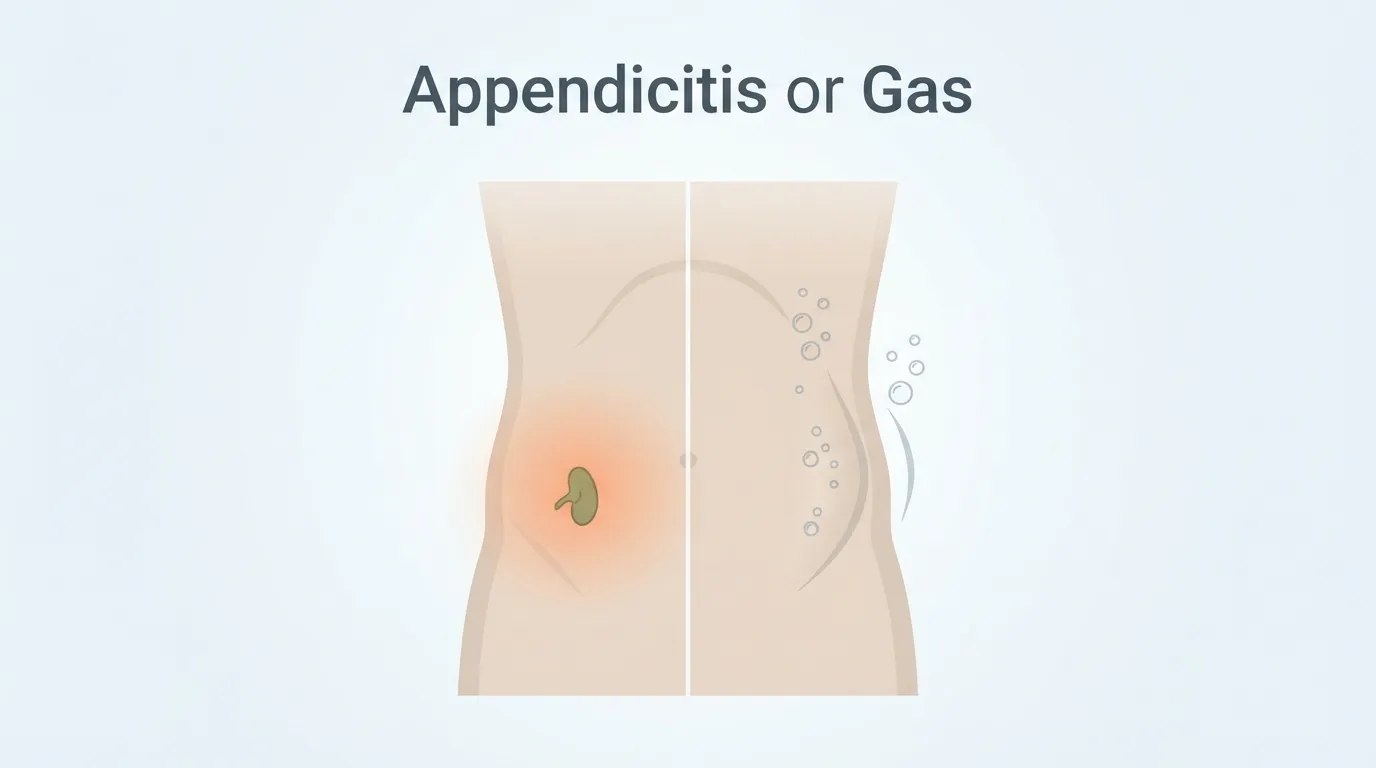
Gas often causes bloating, pressure, belching, passing gas, or cramp-like pain. Appendicitis more often causes abdominal pain that gets worse over time and may move from around the belly button to the lower right side. Because the symptoms can overlap, worsening or severe abdominal pain should be assessed by a medical professional.
A sudden stomach pain can leave you wondering: is it appendicitis or gas? Both can cause abdominal discomfort, pressure, bloating, or changes in bowel habits. That overlap can make the difference difficult to judge at home.
Gas is common and often harmless. Appendicitis, however, is inflammation of the appendix and needs prompt medical attention. There is no single symptom you can use at home to safely rule appendicitis in or out. Knowing the typical patterns can help you recognize when abdominal pain needs urgent evaluation.
Appendicitis or Gas: What Is the Main Difference?
The biggest difference is usually the overall pattern of symptoms, especially how the pain develops.
Gas commonly causes:
- bloating or a swollen feeling
- belching
- passing gas
- pressure or abdominal discomfort
- cramp-like pain
Appendicitis commonly causes abdominal pain that becomes worse over time. The pain may begin near the belly button and later move toward the lower right side of the abdomen. Nausea, vomiting, loss of appetite, fever, constipation, diarrhea, or an inability to pass gas may also occur.
| Feature | Gas | Appendicitis |
|---|---|---|
| Pain | Often pressure or cramps | Often worsening abdominal pain |
| Location | May occur in different areas | Often moves toward the lower right abdomen |
| Bloating | Common | Can occur |
| Belching | Common | Not a typical main symptom |
| Passing gas | Common | Some people may be unable to pass gas |
| Nausea or vomiting | Less typical with simple gas | Can occur |
| Loss of appetite | Not usually a main feature | Common |
| Fever | Not expected from ordinary gas | May occur |
| Urgency | Usually settles without emergency treatment | Needs prompt medical assessment |
These differences are useful clues, but they cannot diagnose the cause of abdominal pain by themselves. Appendicitis does not always follow the textbook pattern.
What Does Gas Pain Usually Feel Like?
Gas forms normally in the digestive tract. According to the National Institute of Diabetes and Digestive and Kidney Diseases, common gas symptoms include belching, bloating, abdominal distention, and passing gas.
Gas-related discomfort may feel like:
- pressure or fullness
- bloating
- cramps
- a stretched or swollen feeling
- discomfort that changes location
- an urge to burp or pass gas
Cramp-like abdominal pain can be associated with gas and bloating, although abdominal cramps have many possible causes.
Gas can develop after eating certain foods, swallowing air, or as bacteria in the large intestine break down carbohydrates that were not fully digested earlier in the digestive tract.
What Does Appendicitis Pain Feel Like?
A common appendicitis pattern starts with pain around the belly button or middle of the abdomen. After several hours, the pain may move toward the lower right side and become worse.
The pain may also become worse when you:
- move
- cough
- sneeze
- take a deep breath
MedlinePlus notes that appendicitis pain commonly worsens within hours.
Other possible symptoms include:
- loss of appetite
- nausea
- vomiting
- fever
- abdominal swelling
- constipation
- diarrhea
- difficulty passing gas
Not everyone develops every symptom. The location and pattern of pain can also vary, which is one reason appendicitis can be difficult to identify without a medical examination.
Can Appendicitis Feel Like Gas?
Yes. Appendicitis can sometimes be mistaken for gas or another digestive problem.
Both conditions may involve abdominal discomfort, bloating, constipation, or changes in bowel habits. NIDDK even lists the feeling that having a bowel movement will relieve discomfort among possible appendicitis symptoms.
This means that feeling “gassy” does not prove that the problem is only gas.
Likewise, an inability to pass gas can occur with appendicitis, so it should not automatically be treated as ordinary trapped gas.
Does Passing Gas Mean It Is Not Appendicitis?
No. Passing gas by itself cannot rule out appendicitis.
Passing gas is a normal digestive function and is common when excess gas is causing discomfort. However, doctors diagnose appendicitis by considering the full pattern of symptoms and, when needed, using physical examination, blood or urine tests, and imaging tests.
If discomfort improves after passing gas, that may fit with gas-related pain. But improvement after passing gas is not a reliable test for appendicitis.
Pay attention to the complete picture rather than one symptom.
Signs That Point More Toward Appendicitis
Certain patterns deserve more concern for appendicitis than ordinary gas.
Pain That Keeps Getting Worse
Gas discomfort may fluctuate. Appendicitis commonly produces pain that becomes progressively worse over a period of hours.
Pain Moving to the Lower Right Side
Pain beginning near the belly button and later settling in the lower right abdomen is a classic appendicitis pattern.
However, not every person with appendicitis experiences this exact sequence.
Loss of Appetite
Loss of appetite is a recognized appendicitis symptom and may appear along with abdominal pain.
Nausea or Vomiting
Nausea and vomiting may occur with appendicitis, especially alongside worsening abdominal pain.
Fever
A fever together with worsening abdominal pain can be another warning sign requiring medical evaluation.
Signs That Fit More With Gas
Simple digestive gas more commonly produces:
- frequent belching
- passing gas
- bloating
- abdominal distention
- pressure or fullness
- cramp-like discomfort
These symptoms fit the usual pattern of digestive gas more closely than the classic pattern of appendicitis.
However, symptoms overlap. Bloating or bowel changes should not reassure you if the abdominal pain is severe, persistent, or worsening.
When Should You Seek Medical Help?
Seek prompt medical attention if you think you or your child may have appendicitis. NIDDK advises seeing a doctor or going to an emergency department right away when appendicitis is suspected because quick treatment helps prevent complications.
Medical assessment is particularly important if abdominal pain:
- becomes severe
- keeps getting worse
- moves toward the lower right side
- is accompanied by repeated vomiting
- occurs with fever
- causes significant tenderness
- occurs with a swollen abdomen
- is accompanied by an inability to pass stool or gas
MedlinePlus also advises getting medical help as soon as possible for severe abdominal pain.
Untreated appendicitis can lead to a ruptured appendix and infection within the abdomen, so persistent symptoms should not simply be assumed to be gas.
How Do Doctors Tell the Difference?
There is no dependable home test that can confirm appendicitis.
A healthcare professional may evaluate:
- where the pain began
- whether it has moved
- whether it is worsening
- other symptoms such as nausea, fever, or appetite loss
- tenderness during examination
Tests may include blood tests, urine tests, and imaging such as an ultrasound or CT scan, depending on the situation.
Other conditions can also cause similar abdominal pain, so professional evaluation is sometimes necessary even when the symptoms do not perfectly match appendicitis.
Practical Examples
Example 1: Typical Gas Symptoms
You eat a large meal and later feel bloated and full. You are belching and passing gas, and the discomfort feels cramp-like.
That pattern can fit digestive gas.
Example 2: Worsening Right-Sided Pain
Pain begins around your belly button and becomes stronger over several hours. It then moves toward the lower right side, and you also feel nauseated.
That pattern is associated with appendicitis and should be medically assessed.
Example 3: “It Feels Like Trapped Gas”
You have abdominal pain and feel as though a bowel movement might relieve it, but the pain keeps worsening.
Do not assume this is ordinary gas. That sensation can also occur with appendicitis.
Example 4: Bloating With Severe Pain
You feel bloated but also develop severe or increasing abdominal pain.
Bloating alone does not identify the cause. Severe abdominal pain requires medical attention rather than self-diagnosis.
Common Mistakes When Comparing Appendicitis and Gas
| Common Mistake | Better Approach | Why |
|---|---|---|
| “I passed gas, so it cannot be appendicitis.” | Consider the full symptom pattern. | One symptom cannot rule out appendicitis. |
| “Appendicitis always starts on the lower right.” | Pain may start around the belly button first. | The location can change over time. |
| “Bloating means it is only gas.” | Watch for worsening pain and other symptoms. | Abdominal swelling can occur with appendicitis too. |
| “No fever means no appendicitis.” | Do not depend on one symptom. | Not everyone has every classic symptom. |
| “I should wait until the pain becomes unbearable.” | Seek care for suspected appendicitis. | Prompt treatment can prevent complications. |
The safest rule is not to use one symptom, such as bloating, passing gas, or fever, as a home test.
Appendicitis or Gas: What Should You Do?
If you have mild bloating, belching, passing gas, and temporary cramp-like discomfort, the symptoms may fit ordinary digestive gas.
But worsening, severe, or persistent abdominal pain should not be assumed to be gas, especially when it moves toward the lower right abdomen or occurs with nausea, vomiting, loss of appetite, fever, or significant tenderness.
If appendicitis is a possibility, get medical advice promptly rather than trying to diagnose it at home.
Frequently Asked Questions
How Can I Tell if I Have Gas or Appendicitis?
You cannot reliably diagnose the difference at home. Gas more commonly causes bloating, belching, passing gas, and cramp-like discomfort, while appendicitis often causes pain that worsens and may move toward the lower right abdomen.
Can Appendicitis Cause Gas and Bloating?
Appendicitis can cause abdominal swelling and may cause difficulty passing gas. This means bloating or a “gassy” feeling does not automatically rule out appendicitis.
Does Appendicitis Pain Come and Go Like Gas?
The classic appendicitis pattern is pain that becomes progressively worse over hours rather than simple temporary gas cramps. However, symptoms vary, so the pain pattern alone cannot confirm or exclude appendicitis.
Where Is Appendicitis Pain Usually Located?
It commonly begins around the belly button and later moves to the lower right side of the abdomen. Some people have a different pain pattern, so location should not be used as the only test.
Can You Still Pass Gas With Appendicitis?
A person’s ability to pass gas is not a reliable way to diagnose or exclude appendicitis. Some people with appendicitis develop an inability to pass gas, but symptoms differ from person to person.
How Quickly Does Appendicitis Pain Get Worse?
Appendicitis pain may become worse within hours. A common pattern is pain beginning near the belly button and moving toward the lower right abdomen as it intensifies.
When Should I Go to the Hospital for Possible Appendicitis?
Seek urgent medical assessment if you suspect appendicitis or have severe or worsening abdominal pain, particularly when it occurs with vomiting, fever, increasing tenderness, or other concerning symptoms. Quick treatment reduces the risk of serious complications.
Conclusion
When comparing appendicitis or gas, look at the overall pattern rather than any single symptom. Gas often causes bloating, belching, passing gas, pressure, and cramps. Appendicitis more often involves abdominal pain that becomes worse and may move from around the belly button toward the lower right side.
The symptoms can overlap, so there is no safe home method for ruling out appendicitis. If abdominal pain is severe, worsening, persistent, or accompanied by concerning symptoms, seek medical care promptly.
Use this comparison to recognize warning signs, not to replace a medical diagnosis.

Muhammad Afzal is a language content writer specializing in English grammar, word usage, and vocabulary distinctions. With a strong command of linguistic nuance, Muhammad Afzal focuses on simplifying commonly confused word pairs to help readers communicate with clarity and confidence.