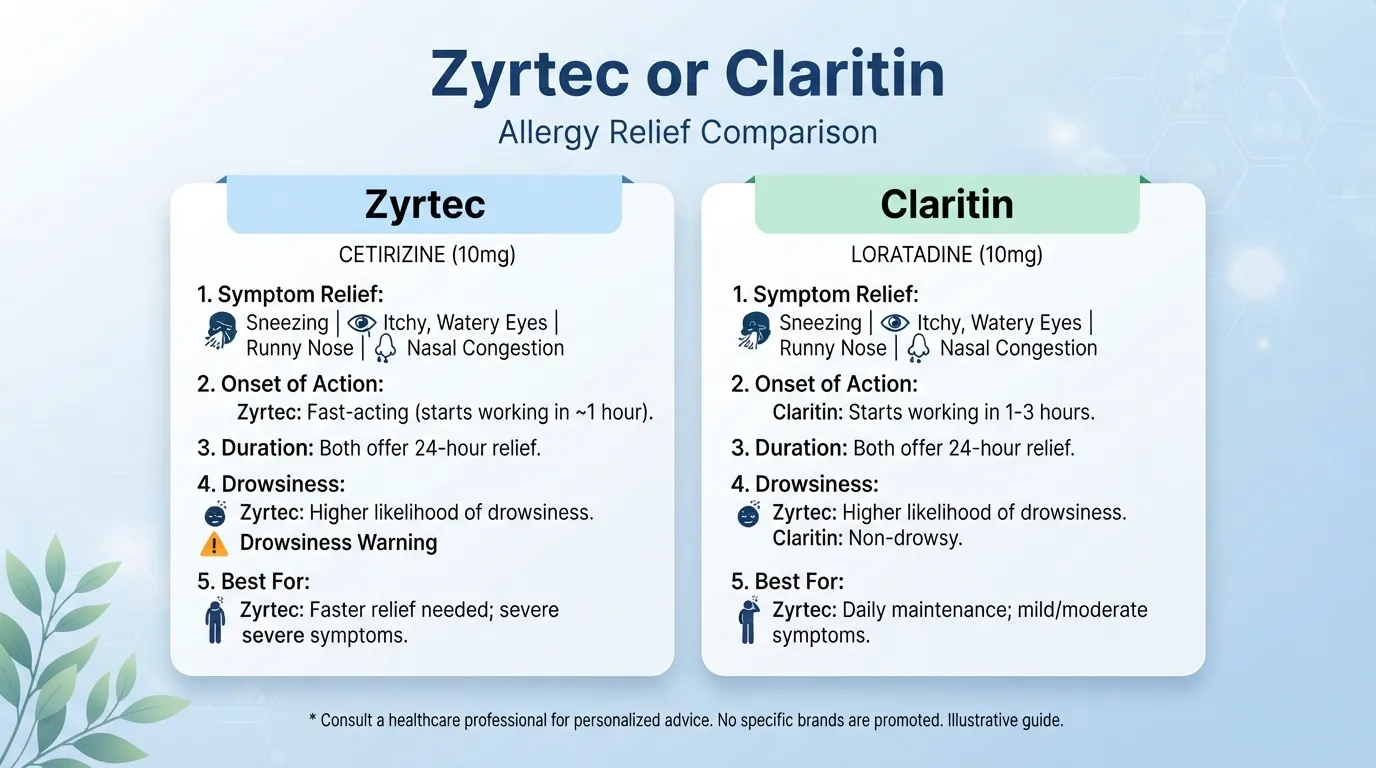
Zyrtec or Claritin means you are choosing between two common over-the-counter allergy medicines. Zyrtec contains cetirizine, while Claritin contains loratadine. Both treat allergy symptoms, but Zyrtec may feel stronger for some people and Claritin is often less likely to cause sleepiness.
Have you ever stood in the allergy aisle and thought, “Should I buy Zyrtec or Claritin?”
I’ve seen this question come up often with seasonal allergies, pet allergies, dust allergies, and itchy eyes. Both boxes look helpful. Both promise allergy relief. Both are popular. But they are not exactly the same.
The main difference is the active ingredient. Zyrtec uses cetirizine. Claritin uses loratadine. Both are antihistamines, which means they help block histamine, the chemical your body releases during an allergic reaction.
This topic can feel confusing because people react differently. One person may love Zyrtec. Another may prefer Claritin because it feels gentler. Some people also worry about drowsiness, timing, children’s use, and whether they can take it every day.
This guide gives a simple, beginner-friendly comparison. It is for general education only, not personal medical advice. Always read the product label and ask a doctor or pharmacist if you have health conditions, take other medicines, are pregnant, or are choosing medicine for a child.
Zyrtec or Claritin: Quick Answer
Choose Zyrtec if you want cetirizine-based allergy relief and do not mind a higher chance of feeling sleepy. Choose Claritin if you want loratadine-based allergy relief and prefer a medicine often marketed as non-drowsy. Both can help with sneezing, runny nose, itchy nose, and watery eyes.
Loratadine is used for allergy symptoms such as sneezing, runny nose, itchy nose or throat, and red, itchy, watery eyes. It works by blocking histamine, which causes allergy symptoms.
Cetirizine is also used for allergic rhinitis, hives, and allergic conjunctivitis, but side effects can include drowsiness, fatigue, and dry mouth.
Simple rule:
- Zyrtec = cetirizine, may work well but can cause more sleepiness
- Claritin = loratadine, often less sedating
- Both = second-generation antihistamines for allergy symptoms
If you need to drive, work, study, or stay alert, ask a pharmacist which option fits you best.
The Background of Zyrtec or Claritin
Zyrtec and Claritin are both second-generation antihistamines. These medicines were made to treat allergy symptoms with less drowsiness than older antihistamines like diphenhydramine. They are often used for hay fever, indoor allergies, pet allergies, and hives.
Allergies happen when your immune system reacts to something harmless, such as pollen, dust, mold, or pet dander. Your body releases histamine. That can lead to:
- sneezing
- runny nose
- itchy nose
- itchy throat
- watery eyes
- red eyes
- itchy skin
- hives
Antihistamines help by blocking histamine action. The NHS groups cetirizine and loratadine under “non-drowsy” antihistamines, meaning they are less likely to make people sleepy than older sedating antihistamines.
That does not mean they never cause sleepiness. Mayo Clinic notes that cetirizine and loratadine are less likely to cause drowsiness, but drowsiness can still happen in some people.
This is why the best choice is personal. Your friend’s best allergy pill may not be your best allergy pill.
Zyrtec or Claritin Explained: Key Differences
The biggest differences are active ingredient, drowsiness risk, and personal response. Zyrtec contains cetirizine. Claritin contains loratadine. Both are used for allergy relief, but Claritin is often preferred when avoiding sleepiness is the main goal.
| Term | Meaning | When to Use | Region/Context |
|---|---|---|---|
| Zyrtec | Brand name for cetirizine allergy medicine | When cetirizine works well for your symptoms | OTC allergy relief |
| Claritin | Brand name for loratadine allergy medicine | When you want loratadine-based relief | OTC allergy relief |
| Cetirizine | Active ingredient in Zyrtec | Allergic rhinitis, hives, itchy eyes | May cause drowsiness |
| Loratadine | Active ingredient in Claritin | Sneezing, runny nose, itchy eyes | Often less sedating |
| Antihistamine | Medicine that blocks histamine | Allergy symptom control | General allergy care |
Claritin’s official product page describes its 24-hour tablets as non-drowsy allergy medicine for allergy symptoms.
Zyrtec’s official site warns that taking cetirizine with alcohol, sedatives, or tranquilizers may increase drowsiness and says to be careful when driving or operating machinery.
That is a useful practical difference. If you know medicine makes you sleepy, Claritin may be easier to try first. If Claritin does not work well enough, some people ask a pharmacist about trying Zyrtec instead.
Which One Should You Use?
Use Claritin if your main concern is staying alert. Use Zyrtec if you need cetirizine-based relief and can watch for drowsiness. The better choice depends on your symptoms, your body, your schedule, and any other medicines or health conditions you have.
Here is simple practical advice:
- For daytime allergies → Claritin may be a good starting point if you want less sleepiness.
- For stronger-feeling allergy relief → some people prefer Zyrtec, but it may cause drowsiness.
- For work or school days → test any new allergy medicine when you can safely monitor how you feel.
- For children → follow the exact label and ask a doctor or pharmacist when unsure.
- For pregnancy, liver disease, kidney disease, or other medicine use → ask a healthcare professional first.
- For hives or skin itching → either may help, but your doctor may guide the best choice.
MedlinePlus says loratadine is used to relieve allergy symptoms and also itching and redness from hives.
StatPearls notes that cetirizine is used for allergic rhinitis, urticaria, and allergic conjunctivitis, but people should be educated about possible side effects like drowsiness, fatigue, and dry mouth.
If one medicine does not help, do not keep stacking allergy pills without advice. Ask a pharmacist or doctor what to try next.
Common Mistakes With Zyrtec or Claritin
Most mistakes happen when people assume all allergy medicines work the same. Another common mistake is mixing medicines, ignoring drowsiness warnings, or expecting pills to fix every allergy symptom. These medicines help many symptoms, but they are not the right answer for every allergy problem.
| Mistake | Correction | Why It Happens |
|---|---|---|
| Taking both together without asking | Ask a pharmacist first | People think more medicine means better relief |
| Ignoring drowsiness | Test carefully and avoid risky tasks if sleepy | “Non-drowsy” sounds like “never drowsy” |
| Using adult doses for children | Follow child dosing label | Parents want quick relief |
| Expecting instant cure | Track symptoms and timing | Allergy relief varies by person |
| Treating severe symptoms at home only | Get medical help for serious reactions | Allergies can sometimes be dangerous |
Mistake 1: Thinking “non-drowsy” means no one gets sleepy
Claritin is often marketed as non-drowsy, and loratadine is generally less sedating. Still, people can react differently. Mayo Clinic notes that even newer antihistamines like cetirizine and loratadine can cause drowsiness in some people.
Mistake 2: Mixing allergy medicines without advice
Do not combine Zyrtec and Claritin just because symptoms are bad. Ask a pharmacist or doctor first. Taking extra antihistamines can increase side effects.
Mistake 3: Ignoring alcohol and sedatives
Zyrtec’s official guidance warns that alcohol, sedatives, or tranquilizers may intensify drowsiness with cetirizine.
Mistake 4: Using antihistamines for every nose symptom
A blocked nose, sinus infection, cold, or flu may need a different approach. If symptoms are severe, long-lasting, or unusual, get medical advice.
Zyrtec or Claritin in Real-World Examples
Zyrtec and Claritin are used in everyday allergy situations. The right choice often depends on whether the person values stronger symptom control, less sleepiness, long daily coverage, or a gentler feeling during work and school hours.
Professional email example
Hi team,
My allergies are bad today, so I may take Claritin before the meeting because I need to stay alert.
This makes sense when drowsiness is a concern.
Parent example
My child has seasonal allergies. I will check the label and ask the pharmacist whether children’s Zyrtec or Claritin is more suitable.
This is safer than guessing.
Student example
I tried Zyrtec at night because I wanted to see if it made me sleepy before using it on a school day.
This is practical because cetirizine can cause drowsiness in some people.
Allergy season example
During pollen season, she used Claritin in the morning and tracked sneezing, itchy eyes, and runny nose for a week.
Tracking symptoms helps you know if the medicine is helping.
Doctor visit example
I tried loratadine and cetirizine at different times, but my symptoms are still bad. What should I try next?
This gives the doctor or pharmacist useful information.
Zyrtec or Claritin: Data, Trends & Usage
The search intent behind “Zyrtec or Claritin” is informational and health-related. Most readers want to compare allergy relief, drowsiness, active ingredients, side effects, timing, and which medicine may fit their symptoms better.
People often search this phrase when they have:
- seasonal allergies
- hay fever
- pet allergies
- dust allergies
- itchy eyes
- sneezing
- runny nose
- hives
- concern about drowsiness
The key insight is that both medicines belong to the same broad category, but they do not feel the same for every person.
The NHS explains that non-drowsy antihistamines are less likely to cause sleepiness than sedating antihistamines, and includes both cetirizine and loratadine in that group.
For many readers, the real question is not “Which one is stronger?” It is:
Which one helps my symptoms without making my day harder?
That answer may take safe trial, label reading, and pharmacist guidance.
Zyrtec or Claritin Comparison Table
A simple comparison makes the choice easier. Zyrtec and Claritin are both OTC allergy medicines. Zyrtec contains cetirizine and may cause more drowsiness. Claritin contains loratadine and is often chosen when staying alert matters.
| Term/Variant | Meaning | Region/Context | Best Used When |
|---|---|---|---|
| Zyrtec | Brand name for cetirizine | OTC allergy medicine | You want cetirizine-based relief |
| Claritin | Brand name for loratadine | OTC allergy medicine | You want loratadine-based relief |
| Cetirizine | Antihistamine in Zyrtec | Allergy and hives relief | You can watch for sleepiness |
| Loratadine | Antihistamine in Claritin | Allergy and hives relief | You prefer less drowsiness risk |
| Non-drowsy antihistamine | Less likely to make you sleepy | Modern allergy treatment | You need daytime symptom relief |
| Sedating antihistamine | More likely to make you sleepy | Older allergy medicines | Sometimes used when sleepiness is acceptable |
FAQs About Zyrtec or Claritin
Q: What does Zyrtec or Claritin mean?
A: Zyrtec or Claritin means you are comparing two common OTC allergy medicines. Zyrtec contains cetirizine. Claritin contains loratadine.
Q: Is Zyrtec stronger than Claritin?
A: Some people feel Zyrtec works better for them, but it can also cause more drowsiness. The best choice depends on your body and symptoms.
Q: Is Claritin less drowsy than Zyrtec?
A: Claritin is often chosen when people want less sleepiness. Zyrtec can cause drowsiness, and its official guidance warns people to be careful with alcohol, sedatives, driving, and machinery.
Q: Can I take Zyrtec and Claritin together?
A: Do not combine them unless a doctor or pharmacist tells you to. Taking two antihistamines may increase side effects without giving better relief.
Q: Which is better for itchy eyes, Zyrtec or Claritin?
A: Both may help allergy-related itchy or watery eyes. MedlinePlus lists loratadine for red, itchy, watery eyes, and cetirizine is used for allergic conjunctivitis.
Q: Which is better for hives, Zyrtec or Claritin?
A: Both can be used for hives or itching. Cetirizine is used for urticaria, and loratadine can relieve itching and redness from hives. Ask a clinician if hives are severe, spreading, or recurring.
Q: Can children take Zyrtec or Claritin?
A: Children’s versions exist, but dosing depends on age and product form. Follow the package exactly and ask a doctor or pharmacist if the child is young or has other health concerns.
Conclusion
Now you know the basic difference between Zyrtec or Claritin.
Zyrtec contains cetirizine. It can help allergy symptoms, but it may cause drowsiness in some people. Claritin contains loratadine. It is often chosen when people want allergy relief with less chance of sleepiness.
Both medicines can help with common allergy symptoms like sneezing, runny nose, itchy nose, and watery eyes. Both are second-generation antihistamines. Both should be used according to the label.
The best choice depends on your symptoms, schedule, health, age, and how your body reacts.
Remember this simple rule:
- Zyrtec = cetirizine, watch for drowsiness
- Claritin = loratadine, often less sedating
- Ask a pharmacist if you are unsure
Do not guess with children, pregnancy, other medicines, or serious symptoms. Read the label, track how you feel, and get medical advice when needed.
Bookmark this guide so you can compare Zyrtec or Claritin before allergy season hits.

Muhammad Afzal is a language content writer specializing in English grammar, word usage, and vocabulary distinctions. With a strong command of linguistic nuance, Muhammad Afzal focuses on simplifying commonly confused word pairs to help readers communicate with clarity and confidence.